
Conversational AI for Real Estate: Use Cases & Benefits
Table of Contents
Are you overwhelmed by constant property inquiries flooding your inbox? Have you wondered how some real estate professionals effortlessly manage hundreds of leads while you struggle with basic responses? The most successful agents and property managers already use technology that works around the clock, never takes breaks, and converts more leads than traditional methods.
Picture this: It is 2 AM, and a potential buyer discovers your perfect listing online. Instead of waiting until morning, they engage with an intelligent assistant that understands their needs, qualifies their interest, and schedules a showing. By morning, you have a qualified lead ready to move forward. This is Conversational AI for Real Estate transforming client connections.
The real estate industry faces mounting challenges impacting your daily success. High lead volumes overwhelm your response capacity. Manual follow-ups consume valuable time. Rising operational costs squeeze profit margins. Slow response times cost deals to faster competitors. These challenges define your reality.
Conversational AI for Real Estate emerges as your scalable solution for automating communication, improving lead conversion, and enhancing customer experience. By this guide’s end, you will understand exactly how this technology transforms business operations and provides competitive advantage.
Key Takeaways:
Readers will gain a clear understanding of how Conversational AI for Real Estate transforms lead management, client communication, and operational efficiency.
- Learn how conversational AI captures, qualifies, and nurtures leads automatically—24/7.
- Understand core technologies like NLP, machine learning, and CRM/MLS integrations powering real estate AI systems.
- Explore high-impact use cases including property search, appointment scheduling, tenant support, and seller onboarding.
- Discover how faster response times significantly increase conversion rates and client satisfaction.
- Evaluate implementation strategies, integration considerations, and optimization best practices.
- See how solutions from Shadhin Lab enable scalable, ROI-driven conversational AI deployment tailored for real estate professionals.
Table of Contents
What Is Conversational AI for Real Estate?
Have you ever wished you could clone yourself to handle every client interaction perfectly? Conversational AI for Real Estate represents exactly that capability – intelligent technology that communicates naturally with prospects and clients.
This technology encompasses AI-powered chatbots and voice assistants specifically designed for real estate interactions. These systems engage with buyers, sellers, renters, agents, and property managers using natural language processing. They understand context, remember previous conversations, and provide personalized responses that feel genuinely human.
When you implement conversational AI, you essentially hire a tireless assistant that speaks your clients’ language. The system handles initial inquiries, qualifies leads, provides property information, and seamlessly transfers complex discussions when needed. Clients receive immediate responses while you focus on closing deals.
Core Technologies Behind Conversational AI
The foundation relies on several sophisticated yet accessible technologies working together for your benefit.
Natural Language Processing enables the system to understand what clients really mean, not just what they say. Machine learning algorithms continuously improve responses based on successful interactions with your specific audience. Speech recognition technology handles voice calls and messages with remarkable accuracy.
Intent detection identifies whether someone wants to schedule tours, ask about pricing, or request neighborhood information. Dialogue management maintains conversation flow across multiple interactions, remembering where each client left off. AI agents orchestrate complex workflows, handling multi-step processes from initial inquiry to appointment confirmation.
These technologies integrate seamlessly with existing systems, creating powerful extensions of current operations rather than replacing them entirely.
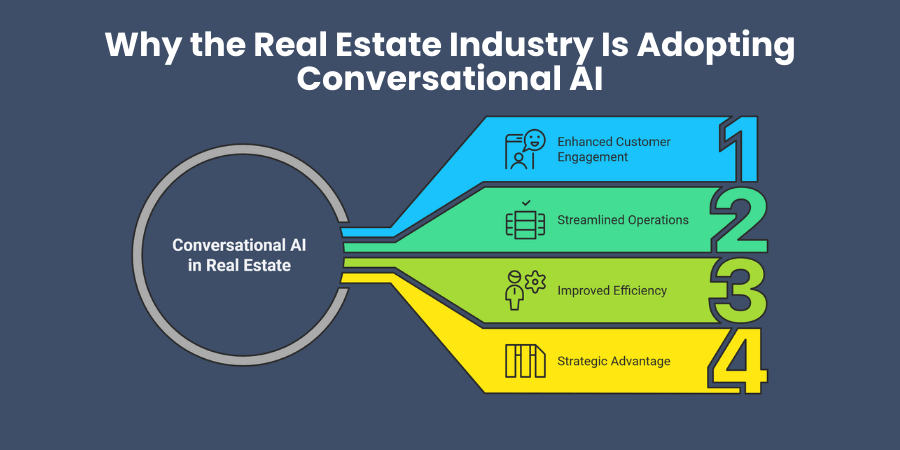
Why the Real Estate Industry Is Adopting Conversational AI
What drives successful real estate professionals to embrace this technology? The answer lies in addressing specific pain points you face daily.
Lead responsiveness determines conversion success more than any other factor. Studies show responding within five minutes increases lead qualification chances by 900%. However, you cannot personally monitor inquiries around the clock. Conversational AI responds instantly, every time, ensuring you never miss critical first interactions.
Clients expect 24/7 availability in today’s connected world. They browse properties late at night, during lunch breaks, and on weekends. When they have questions, they want immediate answers. Traditional business hours no longer align with client behavior patterns.
Automation of repetitive inquiries frees time for high-value activities. Instead of answering identical questions about square footage, school districts, and pricing dozens of times daily, you focus on negotiations, relationship building, and strategic planning.
Competitive differentiation becomes crucial as more agents enter the market. Clients remember exceptional service experiences. When your AI assistant provides instant, accurate, helpful responses while competitors leave people waiting, you create lasting positive impressions.
How Conversational AI Works in Real Estate
The system operates through three integrated layers that work together seamlessly.
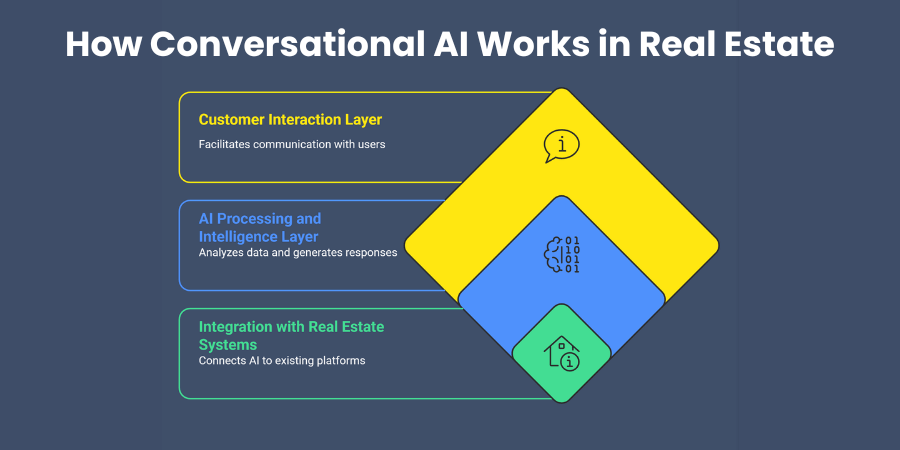
Customer Interaction Layer
Clients interact with conversational AI through multiple channels that feel natural and convenient. Website chat widgets engage visitors browsing listings. Mobile app integrations provide instant support within branded applications. Messaging platform connections handle inquiries through Facebook Messenger, WhatsApp, and text messages.
Voice-based interactions manage phone calls when you are unavailable. The system answers basic questions, takes detailed messages, and schedules callbacks based on availability. This multi-channel approach ensures clients reach you through preferred communication methods.
AI Processing and Intelligence Layer
When clients ask questions, the system processes their intent using sophisticated algorithms. Context handling remembers previous conversations, creating continuity across multiple interactions. Property matching algorithms suggest relevant listings based on stated preferences and behavioral patterns.
Response generation creates personalized answers reflecting your brand voice and communication style. The system learns from successful interactions, continuously improving its ability to serve your specific client base effectively.
Integration with Real Estate Systems
True power emerges through seamless integration with existing business systems. CRM synchronization ensures every interaction updates client records automatically. MLS integration provides real-time property information, pricing updates, and availability status.
Property management system connections handle maintenance requests, rent inquiries, and tenant communications. Scheduling tool integration manages calendars, booking appointments during available time slots. Marketing platform connections track lead sources and campaign effectiveness.
Conversational AI Use Cases in Real Estate
These practical applications demonstrate immediate value you can expect from implementation.
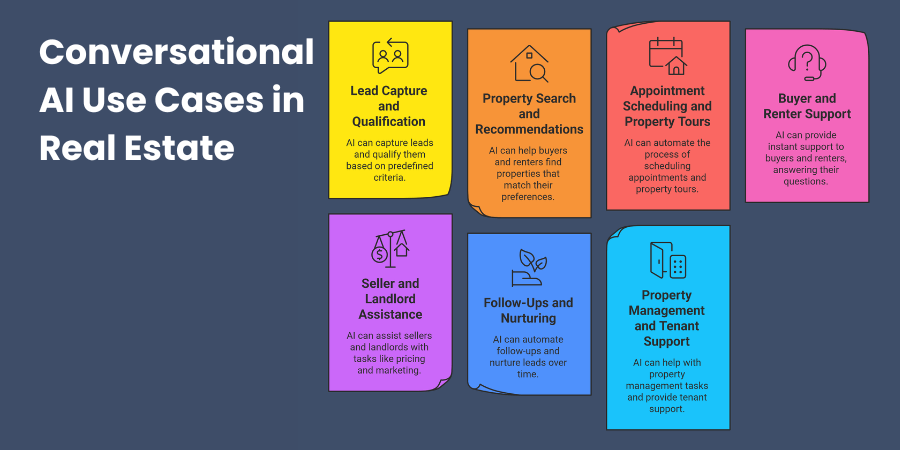
Lead Capture and Qualification
Conversational AI captures visitor information through engaging conversations rather than static forms. The system asks qualifying questions naturally, determining budget ranges, timeline preferences, and specific requirements.
Automated lead routing ensures qualified prospects reach the right team member immediately. High-priority leads trigger instant notifications, while nurture-stage prospects enter automated follow-up sequences. You receive pre-qualified leads with detailed context about needs and preferences.
Property Search and Recommendations
Clients often struggle to articulate exactly what they want in properties. Conversational AI guides them through discovery conversations, uncovering preferences they might not initially consider. The system asks about lifestyle needs, commute requirements, and family considerations.
Personalized recommendations emerge from these conversations, presenting properties matching both stated and implied preferences. Clients receive curated suggestions rather than overwhelming search results, improving experiences while increasing showing requests.
Appointment Scheduling and Property Tours
Coordinating schedules consumes significant time in traditional real estate operations. Conversational AI handles appointment booking automatically, checking availability and confirming details with clients. The system manages rescheduling requests and sends reminder notifications.
Virtual tour coordination becomes seamless, with the system providing access links and technical support. Clients receive preparation instructions and follow-up materials automatically, ensuring smooth experiences reflecting your professionalism.
Buyer and Renter Support
Clients have countless questions about listings, neighborhoods, and processes. Conversational AI provides instant answers about property features, pricing history, and local amenities. The system accesses comprehensive databases to deliver accurate, up-to-date information.
Neighborhood insights include school ratings, crime statistics, and local business information. Process guidance helps first-time buyers understand steps, timelines, and requirements. This comprehensive support builds confidence and trust throughout client journeys.
Seller and Landlord Assistance
Property owners need support with listing inquiries, market valuations, and onboarding processes. Conversational AI handles initial seller consultations, gathering property details and owner objectives. The system provides preliminary market analysis and explains services clearly.
Listing optimization suggestions emerge from market data analysis, helping owners understand pricing strategies and preparation recommendations. Automated follow-up ensures consistent communication throughout listing processes.
Follow-Ups and Nurturing
Consistent follow-up separates successful agents from average performers. Conversational AI maintains regular contact with prospects through personalized messages and valuable content delivery. The system tracks engagement levels and adjusts communication frequency accordingly.
Long-term nurturing campaigns keep you top-of-mind with future clients. Market updates, new listing alerts, and educational content arrive automatically, maintaining relationships until clients are ready to move forward.
Property Management and Tenant Support
Tenant communications consume significant time for property managers. Conversational AI handles maintenance requests, processing details and routing urgent issues appropriately. Rent payment inquiries receive instant responses with account information and payment options.
Lease renewal conversations begin automatically at appropriate times, gathering tenant preferences and scheduling discussions. This proactive approach improves retention rates while reducing administrative workload.
Benefits of Conversational AI for Real Estate
The benefits directly address your most pressing business challenges.
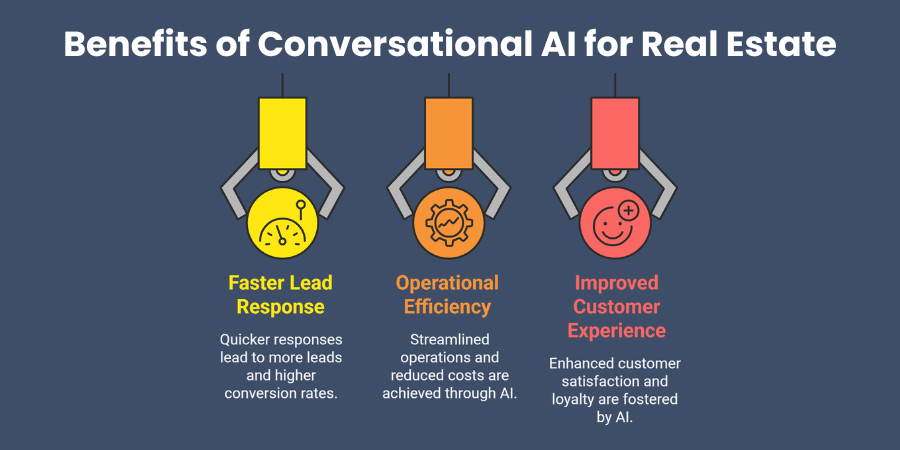
Faster Lead Response and Higher Conversion Rates
Immediate response times dramatically improve lead conversion success. While competitors leave prospects waiting, your AI assistant engages instantly with relevant information and helpful guidance. This responsiveness creates positive first impressions that influence final decisions.
Qualified leads arrive with detailed context about needs, preferences, and timeline. You spend less time on discovery and more time on solutions, accelerating sales processes while improving client satisfaction.
Operational Efficiency and Cost Reduction
Automation handles routine inquiries that previously consumed hours of your time. Administrative tasks like appointment scheduling and information requests process automatically. Your team focuses on high-value activities that directly generate revenue.
Staffing costs decrease as technology handles after-hours inquiries and basic support functions. You serve more clients without proportionally increasing overhead expenses, improving profit margins significantly.
Improved Customer Experience
Clients receive consistent, accurate information regardless of when they contact you. Personalized interactions create connections that feel genuine and helpful. Multi-channel availability ensures clients reach you through preferred communication methods.
Seamless handoffs between AI and human agents maintain conversation continuity. Clients never feel like they are starting over or repeating information, creating smooth experiences that encourage referrals.
Challenges and Limitations of Conversational AI in Real Estate
Understanding these challenges helps you prepare effective solutions and set realistic expectations.
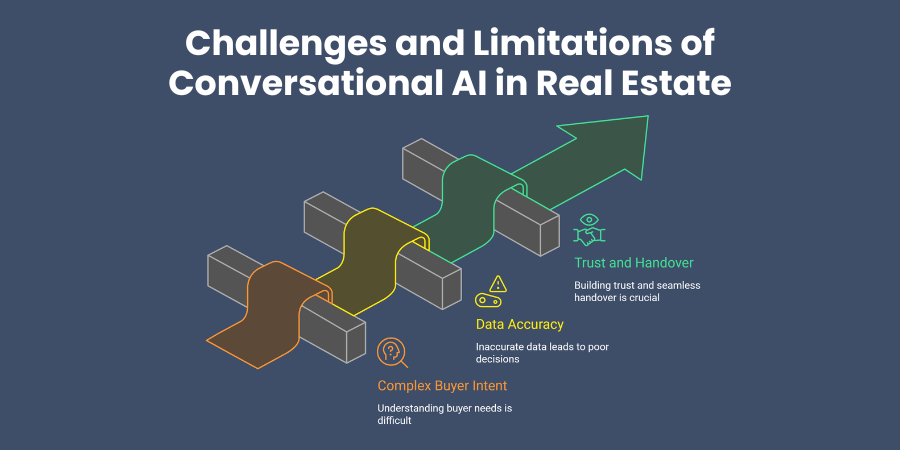
Complex Buyer Intent and Context Handling
Real estate decisions involve numerous variables and emotional considerations. Clients often struggle to articulate their true needs, requiring skilled interpretation and guidance. AI systems excel at processing explicit information but may miss subtle emotional cues.
Nuanced requirements like “good neighborhood feel” or “investment potential” require human judgment and local expertise. Your AI assistant handles initial screening effectively but should transfer complex discussions to experienced agents.
Data Accuracy and System Integration
MLS data synchronization challenges can create inconsistencies between AI responses and actual property status. Pricing updates, availability changes, and listing modifications must propagate quickly across all systems.
CRM integration complexity increases with existing system customizations and data structures. Clean, organized data enables better AI performance, while inconsistent information creates confusion and errors.
Trust, Transparency, and Human Handover
Clients need to understand when they are interacting with AI versus human agents. Transparency builds trust while deception damages relationships and reputation. Clear communication about AI capabilities and limitations sets appropriate expectations.
Smooth handover processes ensure clients feel supported throughout their journey. AI should recognize when human expertise becomes necessary and facilitate seamless transitions without losing conversation context.
How to Implement Conversational AI in Real Estate
This structured approach ensures successful deployment while minimizing disruption to current operations.
Identifying High-Impact Use Cases
Start by analyzing current lead volume and operational bottlenecks. Which repetitive tasks consume the most time? Where do you lose leads due to response delays? These areas offer the highest return on AI investment.
Prioritize use cases based on implementation complexity and potential impact. Lead capture and basic property information represent excellent starting points, while complex negotiation support requires advanced customization.
Platform Selection and Integration
Evaluate conversational AI platforms based on real estate-specific features and integration capabilities. Consider existing technology stack, budget constraints, and scalability requirements. Some platforms specialize in real estate applications while others offer general-purpose solutions.
Integration planning should address data flow, user authentication, and system reliability. Test integrations thoroughly in controlled environments before full deployment.
Training, Testing, and Optimization
Initial training requires comprehensive conversation examples and response templates. Use historical client interactions to create realistic training scenarios. Regular testing with team members and trusted clients identifies improvement opportunities.
Continuous optimization uses conversation analytics and client feedback to refine responses. Monitor performance metrics like response accuracy, client satisfaction, and conversion rates to guide ongoing improvements.
Future of Conversational AI in Real Estate
Emerging trends promise even more powerful capabilities and seamless client experiences.
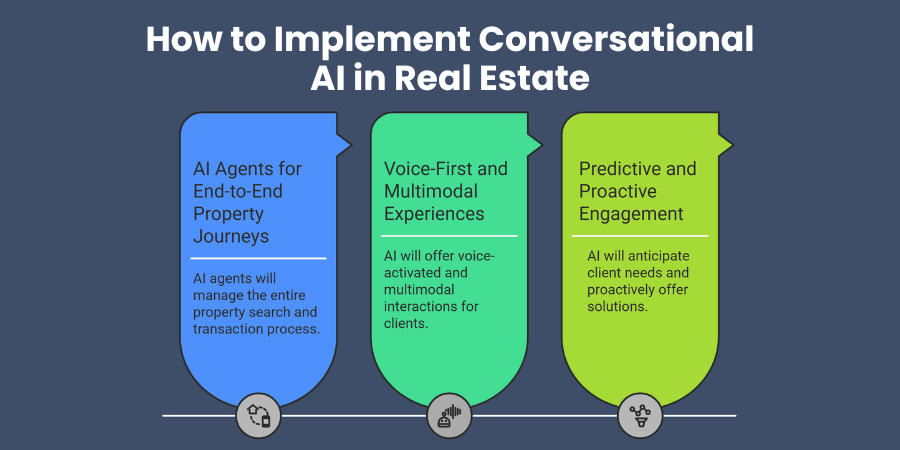
AI Agents for End-to-End Property Journeys
Advanced AI agents will handle complete transaction workflows, from initial inquiry through closing coordination. These systems will manage document collection, deadline tracking, and stakeholder communication autonomously.
Multi-step process automation will reduce administrative burden while ensuring nothing falls through the cracks. Clients will experience smooth, well-coordinated transactions that reflect your professionalism and attention to detail.
Voice-First and Multimodal Experiences
Voice search integration will enable natural property discovery through smart speakers and mobile devices. Clients will describe needs conversationally and receive relevant suggestions instantly.
Visual interaction capabilities will analyze property photos and videos, answering questions about specific features and spaces. Augmented reality integration will provide virtual staging and renovation visualization.
Predictive and Proactive Engagement
Predictive analytics will identify client needs before they explicitly express them. Market trend analysis will trigger proactive outreach with relevant opportunities and insights.
Next-best-action recommendations will guide client interactions, suggesting optimal timing and messaging for maximum effectiveness. Your AI assistant will become a strategic partner in relationship management.
How Shadhin Lab Enables Conversational AI for Real Estate
Shadhin Lab specializes in developing sophisticated AI solutions specifically designed for real estate professionals like you.
Our expertise encompasses conversational AI development, intelligent agent creation, and seamless CRM/MLS integrations. We understand the unique challenges you face and design solutions that address your specific operational needs.
Automation workflows streamline processes while maintaining the personal touch that clients expect. Our ROI-focused deployment approach ensures measurable business impact from day one. You receive ongoing support and optimization services that evolve with your growing needs.
Partnership with Shadhin Lab means access to cutting-edge technology without the complexity of internal development. We handle technical details while you focus on serving clients and growing your business.
Conclusion
You now possess comprehensive understanding of how Conversational AI for Real Estate can transform your business operations and client relationships. This technology represents more than just automation – it provides the scalable foundation for sustainable growth in an increasingly competitive market.
The question is not whether conversational AI will become standard in real estate, but how quickly you will gain the competitive advantages it offers. Early adopters are already experiencing improved lead conversion, operational efficiency, and client satisfaction that directly impact their bottom line.
Your clients expect modern, responsive service that matches their digital lifestyle. Conversational AI for Real Estate enables you to exceed those expectations while building a more efficient, profitable business. The future of real estate communication is conversational, intelligent, and available right now.
Frequently Asked Questions
How much does conversational AI implementation cost for real estate businesses?
Implementation costs vary significantly based on your specific requirements and chosen platform. Basic chatbot solutions start around $100-500 monthly, while comprehensive AI agent systems range from $1,000-5,000 monthly. Most real estate professionals see positive ROI within 3-6 months through improved lead conversion and operational efficiency.
Can conversational AI integrate with existing CRM and MLS systems?
Yes, modern conversational AI platforms offer robust integration capabilities with popular real estate systems. Most major CRMs like Chime, Follow Up Boss, and Top Producer provide API connections. MLS integration ensures real-time property data accuracy. However, integration complexity depends on your existing system customizations.
Will clients know they are talking to AI instead of a human agent?
Transparency is crucial for building trust with your clients. Best practices recommend clearly identifying AI interactions while emphasizing the immediate value clients receive. Most clients appreciate instant responses and accurate information, regardless of the source. Smooth handoffs to human agents occur when complex discussions require personal expertise.
How long does it take to implement conversational AI for a real estate business?
Basic implementation typically requires 2-4 weeks for setup, training, and testing. Complex integrations with multiple systems may extend timelines to 6-8 weeks. However, you can begin seeing benefits immediately with simple lead capture and information delivery functions. Gradual rollout approaches minimize disruption while building team confidence.
What happens when the AI cannot answer a client question?
Well-designed conversational AI systems recognize their limitations and gracefully transfer conversations to human agents. The system maintains conversation context, ensuring clients do not repeat information. Escalation triggers include complex questions, emotional concerns, and explicit requests for human assistance. This hybrid approach combines AI efficiency with human expertise.

Shaif Azad
Related Post

How Conversational AI Improves Healthcare
Have you ever waited on hold for healthcare appointments, transferred multiple times before getting simple answers?...

Conversational AI Use Cases That Drive Revenue
Are you frequently considering how technology could revolutionize your business operations? Conversational AI use cases are...
How Does AI Reduce Costs? A Guide to Business Cost Optimization
Are you lying awake wondering how your business can survive rising operational costs? Have you watched...
