
How Conversational AI Improves Healthcare
Table of Contents
Have you ever waited on hold for healthcare appointments, transferred multiple times before getting simple answers? Healthcare systems worldwide are transforming patient experiences through intelligent technology that understands and responds instantly.
Healthcare systems face unprecedented challenges that directly affect your care experience today. Patient engagement suffers when you cannot get timely responses to pressing health concerns. Operational costs continue rising, making quality healthcare less accessible for many patients like you.
Staff shortages create longer wait times and rushed appointments that leave you feeling unheard. These systemic issues demand innovative solutions that prioritize your needs while supporting healthcare providers.
Conversational AI in Healthcare emerges as a transformative solution for these persistent challenges. This technology creates scalable communication systems that fundamentally improve how you interact with healthcare providers. By understanding this guide, you will discover how Conversational AI in Healthcare transforms your healthcare journey.
This revolutionary technology makes healthcare more accessible, efficient, and personally responsive to your unique needs. Let us explore together how this innovation reshapes healthcare delivery and your future medical experiences.
Key Takeaways
- Readers will be able to understand how conversational AI in healthcare improves patient communication, access, and overall care experiences.
- Discover how conversational AI streamlines appointment scheduling, reminders, and patient support services.
- Explore real-world healthcare use cases including symptom triage, medication adherence, and billing assistance.
- Understand the core technologies like NLP, machine learning, and system integrations powering healthcare AI.
- Evaluate benefits such as improved patient experience, reduced operational costs, and lower staff workload.
- Recognize data privacy, HIPAA compliance, and security considerations when implementing healthcare AI.
- Assess how organizations like Shadhin Lab deliver scalable, compliant conversational AI solutions for healthcare systems.
Table of Contents
What Is Conversational AI in Healthcare?
What makes some healthcare interactions feel naturally conversational while others feel robotic and frustrating? Conversational AI in healthcare represents sophisticated technology enabling natural language interactions between you and healthcare systems.
This technology powers AI chatbots and voice assistants that understand your questions and concerns naturally. When you ask about appointment availability or medication side effects, these systems process language naturally. They provide relevant, helpful responses just as human healthcare professionals would during consultations.
The technology adapts to your communication style and personal preferences seamlessly. Whether you prefer typing questions or speaking them aloud, conversational AI accommodates your needs. This flexibility makes healthcare more accessible regardless of your communication preferences or physical limitations.
Core Technologies Behind Conversational AI
Several sophisticated technologies work together when you ask healthcare systems complex questions about symptoms. Natural Language Processing analyzes your words and determines your specific intent accurately. Speech recognition technology converts your spoken words into processable text for system analysis.
Machine learning algorithms continuously improve responses based on interactions with patients like you daily. Dialogue management systems maintain context throughout conversations, remembering what you discussed earlier. AI agents integrate seamlessly into healthcare workflows, ensuring requests reach appropriate departments and specialists.
These technologies combine to create experiences that feel natural and helpful rather than mechanical. The integration eliminates the frustration commonly associated with automated healthcare communication systems.
Why Healthcare Organizations Are Adopting Conversational AI
What drives healthcare organizations to invest in technology that fundamentally changes patient communication experiences? The answer lies in addressing critical challenges that directly impact your healthcare experience.
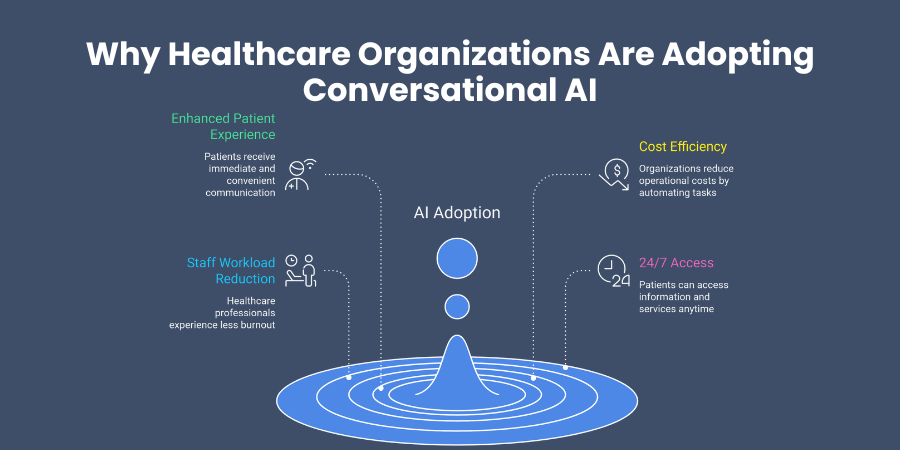
Your expectations for healthcare communication have evolved dramatically in recent years. You expect the same responsiveness and convenience from healthcare providers as other service industries. When you have questions at midnight, you want immediate answers without waiting.
Cost pressures force healthcare organizations to find efficient ways serving more patients effectively. Staff workload reduction becomes essential as healthcare professionals face increasing burnout rates nationwide. The need for twenty-four-seven access to healthcare information and services grows more critical.
Conversational AI addresses these challenges by providing immediate access to information and services. This technology reduces the burden on healthcare staff for routine inquiries significantly.
How Conversational AI Works in Healthcare
How do these intelligent systems actually process your healthcare requests and provide meaningful responses? The operational flow involves several interconnected layers working seamlessly to serve your specific needs.
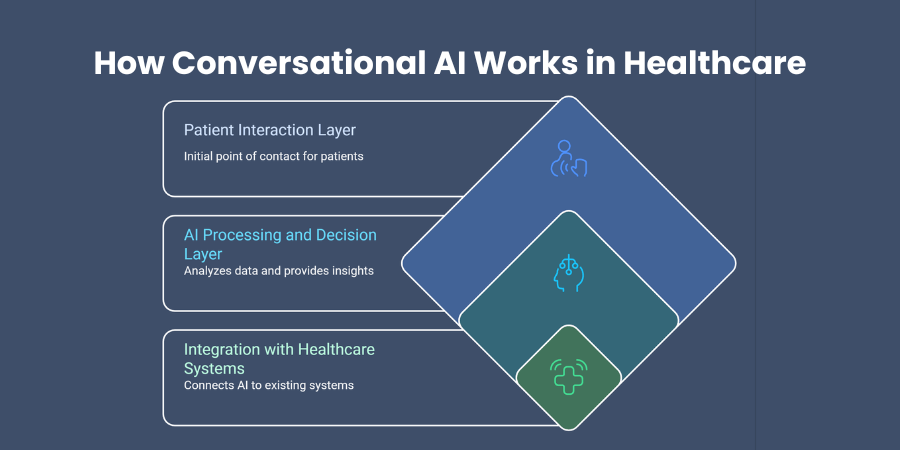
Patient Interaction Layer
When you interact with healthcare conversational AI, multiple communication options become available immediately. Chat-based interfaces allow you to type questions and receive instant, relevant responses. Voice-based systems enable hands-free interactions, particularly valuable when multitasking or having mobility limitations.
These interaction channels adapt to your preferences and circumstances automatically. This ensures you can access healthcare information in the most convenient way possible.
AI Processing and Decision Layer
Intent detection algorithms analyze your questions to understand exactly what you need immediately. Context handling systems remember your previous interactions and current healthcare situation comprehensively. Response generation creates personalized answers based on your specific circumstances and medical history.
This processing happens within seconds, providing you with relevant information without frustrating delays. The system maintains accuracy while delivering rapid responses to your healthcare inquiries.
Integration with Healthcare Systems
True conversational AI power emerges through integration with existing healthcare infrastructure systems. Electronic Health Records provide context about your medical history and current treatments. Scheduling systems enable real-time appointment booking and modifications based on availability.
Customer Relationship Management systems track your interactions and personal preferences over time. Patient portals connect conversational AI with your broader healthcare ecosystem seamlessly. This creates unified experiences across all healthcare touchpoints you encounter regularly.
Conversational AI Use Cases in Healthcare
What specific ways can conversational AI improve your daily healthcare experience significantly? These practical applications demonstrate technology value in real-world healthcare scenarios you encounter regularly.
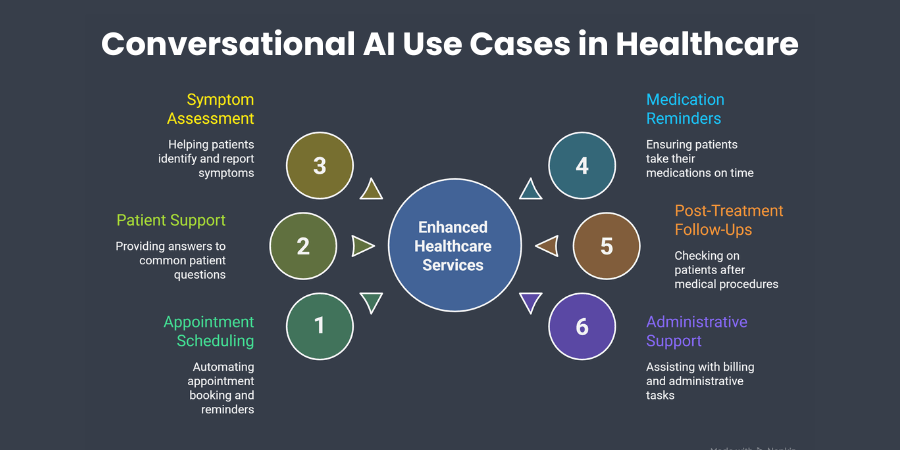
Appointment Scheduling and Reminders
Imagine needing to schedule follow-up appointments when your healthcare provider office is closed. Conversational AI enables you to book appointments instantly, any time of day or night. Automated booking systems check availability across multiple providers and specialties simultaneously.
Rescheduling becomes effortless when your plans change unexpectedly due to work or family. Reminder systems reduce no-shows by sending timely notifications about upcoming appointments. These capabilities eliminate phone tag and reduce frustration coordinating healthcare schedules with busy offices.
Patient Support and FAQs
How often have you had questions about healthcare services but hesitated calling? Conversational AI eliminates this barrier by providing instant answers to common patient questions. You can ask about office hours, insurance coverage, or procedure preparation instructions.
The system provides accurate, up-to-date information without making you feel bothersome to staff. This accessibility encourages you to seek information when you need it most.
Symptom Assessment and Triage
When experiencing concerning symptoms, conversational AI helps determine appropriate care levels needed. These systems collect symptom information and provide guidance about seeking immediate care. They help you decide whether to schedule appointments or monitor symptoms at home.
Importantly, these systems do not provide diagnoses but help make informed healthcare decisions. They serve as valuable first steps in your care journey process.
Medication Reminders and Adherence Support
Do you occasionally forget medications or struggle remembering refill schedules? Conversational AI provides personalized medication management support adapting to your routine. Reminder systems send notifications at optimal times for your daily schedule.
Refill alerts ensure you never run out of essential medications unexpectedly. Adherence tracking helps you and healthcare providers understand your medication patterns better.
Post-Treatment Follow-Ups
After medical procedures or treatments, you often have questions about recovery progress. Automated follow-up systems check on your recovery and provide guidance about symptoms. These interactions help you feel supported during recovery while alerting providers.
Administrative and Billing Support
Navigating healthcare billing and insurance can feel overwhelming and confusing for most patients. Conversational AI simplifies these interactions by answering questions about insurance coverage immediately. You get immediate answers about copays, deductibles, and coverage details without waiting.
Benefits of Conversational AI in Healthcare
What specific advantages can you expect from healthcare organizations implementing conversational AI effectively? These benefits directly impact your healthcare experience and health outcomes significantly.
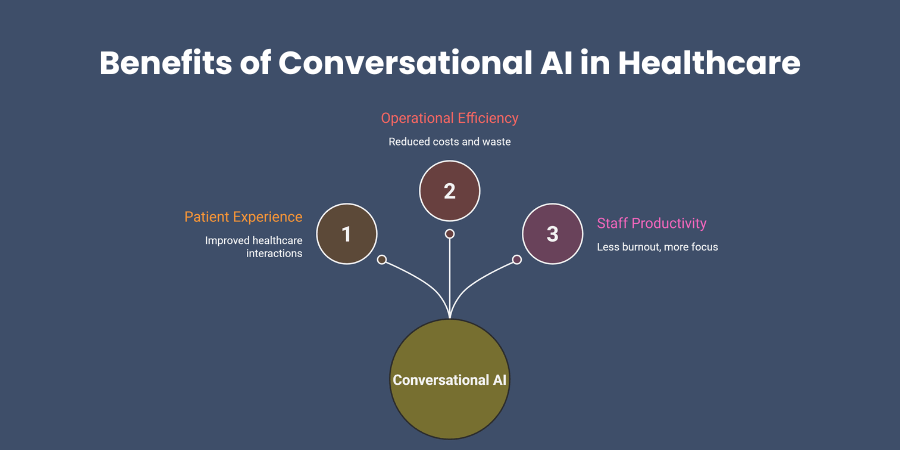
Improved Patient Experience
Faster response times mean you get answers when you need them most. Accessibility improvements ensure you can access healthcare information regardless of location constraints. Enhanced engagement occurs when you feel heard and supported throughout your healthcare journey.
Personalized interactions make you feel like an individual rather than just another patient number.
Operational Efficiency and Cost Reduction
Reduced call center workload means human staff focus on complex issues requiring attention. Administrative automation eliminates repetitive tasks creating bottlenecks in healthcare delivery systems. These efficiency improvements often translate into cost savings for reinvestment.
Staff Productivity and Burnout Reduction
Healthcare professionals can focus on clinical care rather than answering routine administrative questions. This shift improves job satisfaction and reduces burnout among healthcare workers significantly. When staff members feel more fulfilled, you benefit from better care experiences.
Conversational AI in Telemedicine and Remote Care
How does conversational AI enhance virtual healthcare delivery in your healthcare options? This technology supports telemedicine by streamlining virtual care processes effectively. Pre-consultation data collection ensures your virtual appointments are productive and focused properly.
Follow-up communications help maintain continuity of care between virtual visits with providers. Remote patient engagement keeps you connected with healthcare teams regardless of distance. These capabilities make telemedicine more effective and satisfying for your healthcare needs.
Data Privacy, Security, and Compliance Considerations
Are you concerned about privacy and security of healthcare information using conversational AI? These concerns are completely valid and important to address comprehensively.
HIPAA and Healthcare Compliance
Healthcare conversational AI systems must comply with strict regulatory requirements protecting personal information. HIPAA compliance ensures your conversations and data remain confidential and secure always. Regulatory safeguards include encryption, access controls, and audit trails tracking information usage.
Data Security and Patient Trust
Encryption protects your information during transmission and storage processes continuously. Access control systems ensure only authorized personnel can view your healthcare data. Auditability features track all interactions with your personal information comprehensively.
These security measures help build trust between you and healthcare organizations implementing AI.
Challenges and Limitations of Conversational AI in Healthcare
What realistic constraints should you understand about conversational AI in healthcare settings? Acknowledging these limitations helps set appropriate expectations for your interactions with these systems.
Clinical Accuracy and Context Limitations
Conversational AI systems excel at providing information and assistance but cannot replace judgment. These systems work best for routine inquiries and administrative tasks rather than decisions. Understanding these boundaries helps you use conversational AI effectively while knowing when humans.
Integration with Legacy Healthcare Systems
Many healthcare organizations use older computer systems that may not integrate seamlessly. These technical challenges can create limitations in the services available to you. Operational challenges may also arise as healthcare organizations adapt workflows to incorporate AI.
Patient Adoption and Trust
Some patients prefer human interactions for all healthcare communications with their providers. Usability considerations become important for patients who may not be comfortable with technology. Acceptance varies among different patient populations, and healthcare organizations must accommodate preferences.
How to Implement Conversational AI in Healthcare
If you work in healthcare or influence technology decisions, what approach ensures success?
Identifying High-Impact Use Cases
Prioritization should focus on high-volume, routine interactions consuming significant staff time currently. Value-based selection considers which use cases will most improve patient experience effectively. Starting with clear, measurable objectives helps ensure successful implementation and demonstrates stakeholder value.
Technology Selection and Integration
Platform choice should consider your organization existing technology infrastructure and future needs. System interoperability ensures conversational AI works seamlessly with current healthcare systems. Vendor evaluation should include healthcare experience, compliance capabilities, and ongoing support services.
Testing, Training, and Optimization
Continuous improvement processes ensure conversational AI systems become more effective over time. Monitoring capabilities track performance and identify areas for enhancement and improvement. Staff training helps healthcare workers understand how to work effectively with AI.
Future of Conversational AI in Healthcare
What exciting developments can you expect in conversational AI healthcare applications? Emerging trends point toward more sophisticated and personalized healthcare interactions for patients.
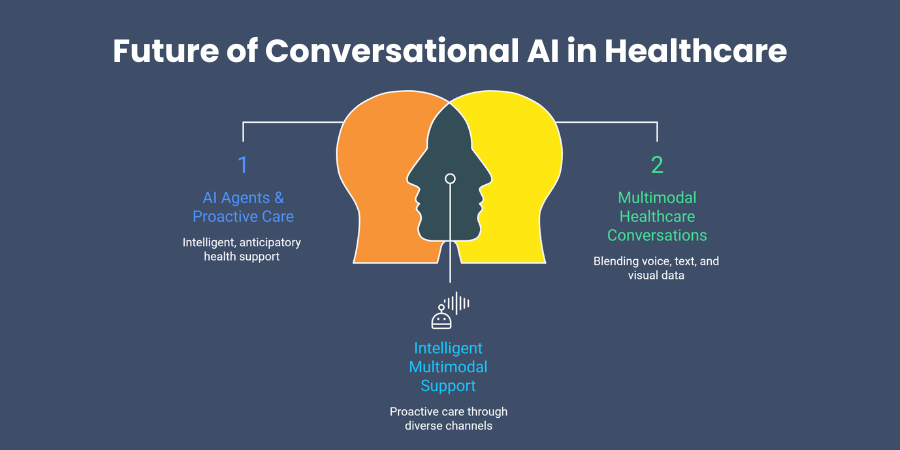
AI Agents and Proactive Care
Predictive capabilities will enable conversational AI to anticipate your healthcare needs before problems. Proactive patient engagement will help prevent health issues rather than just responding. These advances could fundamentally change how you experience preventive healthcare services.
Multimodal Healthcare Conversations
Future systems will combine voice, text, and visual interactions providing richer experiences. You might share photos of symptoms or receive visual instructions for procedures. These multimodal capabilities will make healthcare communication more natural and effective overall.
Personalized and Preventive Care
AI-driven personalization will tailor healthcare interactions to your specific needs and preferences. Preventive care recommendations will become more precise and actionable for your situation. Scale capabilities will make personalized healthcare accessible to larger populations worldwide.
How Shadhin Lab Enables Conversational AI in Healthcare
Are you looking for expertise implementing conversational AI for healthcare applications effectively? Shadhin Lab serves as a strategic partner for healthcare organizations seeking conversational AI. Our expertise in conversational AI focuses specifically on healthcare applications and requirements.
AI agent development creates sophisticated systems integrating seamlessly with healthcare workflows. Healthcare integration capabilities ensure compliance with regulatory requirements and industry standards. Compliance-ready architectures protect patient data while enabling innovative healthcare experiences.
Scalable deployment approaches help healthcare organizations implement conversational AI gradually and sustainably.
Conclusion
You now possess comprehensive knowledge about how Conversational AI in Healthcare transforms patient experiences. This technology addresses real challenges you face when seeking healthcare services daily. The benefits extend beyond convenience to include improved access and better communication.
While challenges exist, the potential for conversational AI to enhance your healthcare continues. What aspects of conversational AI in healthcare resonate most with your needs? Which applications would make the biggest difference in your healthcare interactions?
The future of healthcare communication becomes more responsive, accessible, and patient-centered through AI. Your healthcare experiences will continue improving as these technologies mature and adoption grows.
Frequently Asked Questions
Is conversational AI in healthcare secure and HIPAA compliant?
Yes, properly implemented healthcare conversational AI systems must comply with HIPAA regulations. These systems use encryption, access controls, and audit trails protecting personal health information. Always verify that healthcare providers use compliant systems for your safety.
Can conversational AI replace my doctor or healthcare provider?
No, conversational AI cannot replace clinical judgment and medical expertise from professionals. These systems excel at administrative tasks and routine questions but cannot diagnose conditions. You should always consult healthcare professionals for medical concerns and treatment decisions.
How accurate is conversational AI for healthcare information?
Conversational AI accuracy depends on training data quality and system design factors. For routine administrative questions and general health information, these systems are accurate. However, you should verify important medical information with qualified healthcare professionals always.
What happens if conversational AI cannot answer my question?
Well-designed healthcare conversational AI systems recognize limitations and escalate complex questions appropriately. You should always have access to human support when AI systems cannot address needs. This ensures you receive appropriate care and information when needed most.
How much does implementing conversational AI in healthcare cost?
Implementation costs vary significantly based on system complexity, integration requirements, and organizational size. Many healthcare organizations find that efficiency gains and improved patient satisfaction justify investment. Cost-benefit analysis should consider long-term operational improvements and patient experience enhancements.

Shaif Azad
Related Post
Conversational AI Use Cases That Drive Revenue
Are you frequently considering how technology could revolutionize your business operations? Conversational AI use cases are...
How Does AI Reduce Costs? A Guide to Business Cost Optimization
Are you lying awake wondering how your business can survive rising operational costs? Have you watched...
How AI Improves Demand Forecasting Accuracy and Decision-Making
Are you tired of watching your inventory costs spiral out of control while customers walk away...
