
MCP vs APIs: Are APIs Becoming Obsolete?
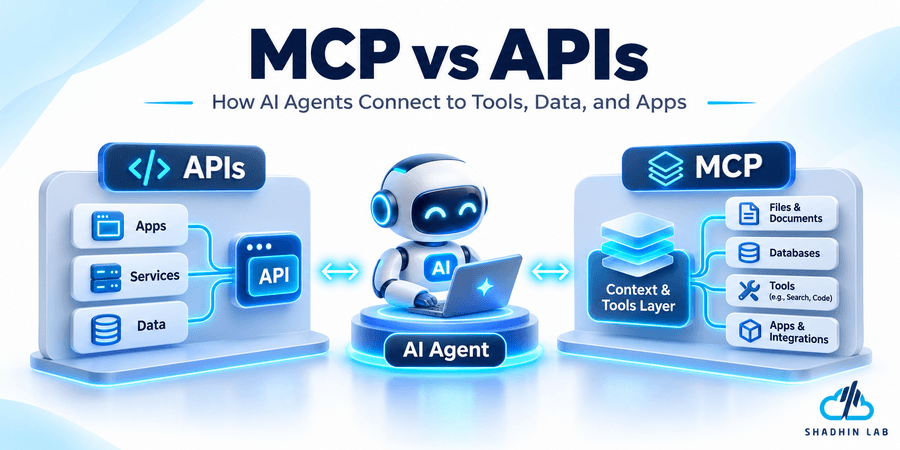
Table of Contents
Artificial Intelligence is changing how applications interact with software. AI assistants and autonomous agents can now perform tasks, retrieve information, and interact with business systems. This raises an important question: Are traditional APIs becoming obsolete?
The short answer is no. APIs remain essential, but the way AI applications access them is evolving. This is where the Model Context Protocol (MCP) comes in.
Table of Contents
What Happens to Existing Applications?
Most business applications already rely on REST APIs, databases, and established backend services. These systems support web applications, mobile apps, and third-party integrations.
With AI adoption, a new type of user is emerging: AI assistants and agents. Instead of replacing existing applications, MCP introduces an additional integration layer that allows AI applications to interact with existing software capabilities.
Why Traditional APIs Are Not Enough for AI Agents
An ERP system may contain hundreds of API endpoints for sales reports, inventory, customers, invoices, and payments.
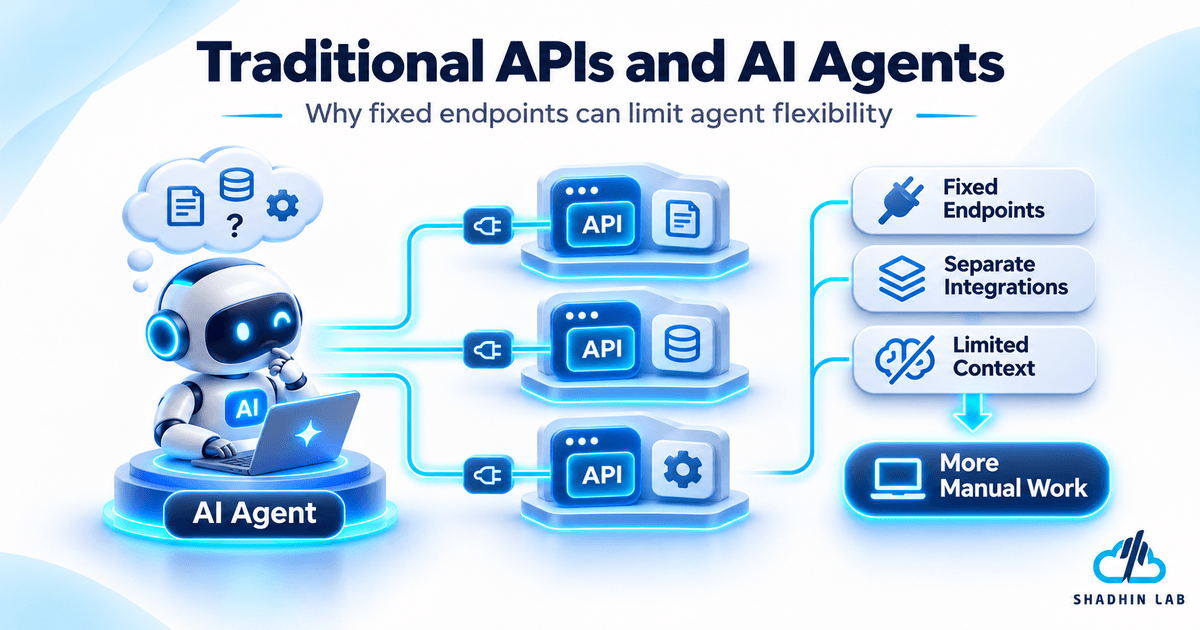
However, simply making these endpoints available does not mean an AI agent automatically understands how to use them.
An agent needs to know:
- Which tools are available?
- What does each tool do?
- What inputs are required?
- How can it interact with them consistently?
MCP addresses this challenge by providing a standardized way for AI applications to discover and use available capabilities.
API vs MCP: Understanding the Difference
APIs and MCP serve different but complementary purposes.
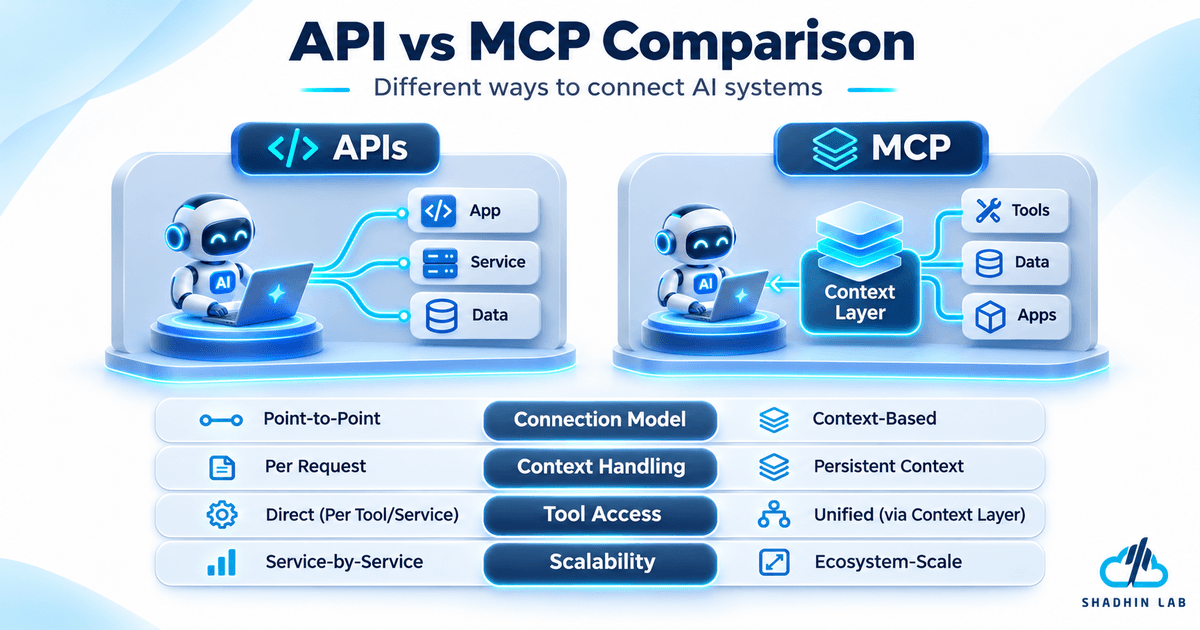
APIs (Application Programming Interfaces) define how software systems communicate through endpoints, HTTP methods, request and response formats, and authentication mechanisms.
MCP (Model Context Protocol) provides a standard interface through which AI applications can discover tools, understand their input schemas, invoke functions, and access resources and prompts.
For example, an API may expose an endpoint to retrieve an invoice. MCP allows an AI application to discover that capability and invoke it through a standardized protocol.
MCP does not replace the underlying API. It makes existing capabilities easier for AI applications to access.
How Does an AI Assistant Communicate with an Application?
The interaction typically follows a structured process:
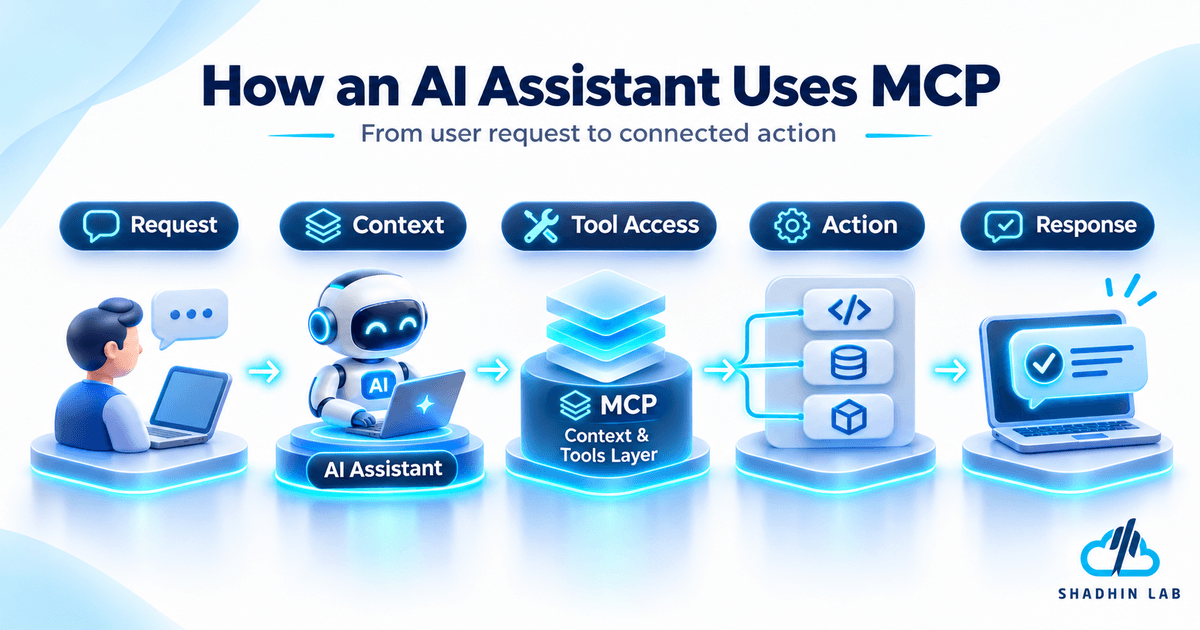
- A user submits a request in natural language.
- The AI application receives the request.
- Its MCP client communicates with an MCP server.
- The client discovers available tools.
- The AI application selects and invokes the appropriate tool.
- The MCP server communicates with application services or existing APIs.
- The application returns the result.
- The AI assistant presents an understandable response to the user.
This approach allows AI applications to interact with business systems without needing to understand every internal implementation detail.
Do You Need to Rewrite Your Existing Application?
No. Existing applications do not necessarily need a complete architectural rewrite to support MCP.
For example, a Laravel application with REST APIs, business logic, and a MySQL database can continue operating as before.
There are two practical integration approaches:
- Direct service integration: The MCP server communicates with existing application services.
- API-based integration: The MCP server communicates with existing REST APIs, which then access application services and databases.
Both approaches can extend application accessibility while preserving existing functionality.
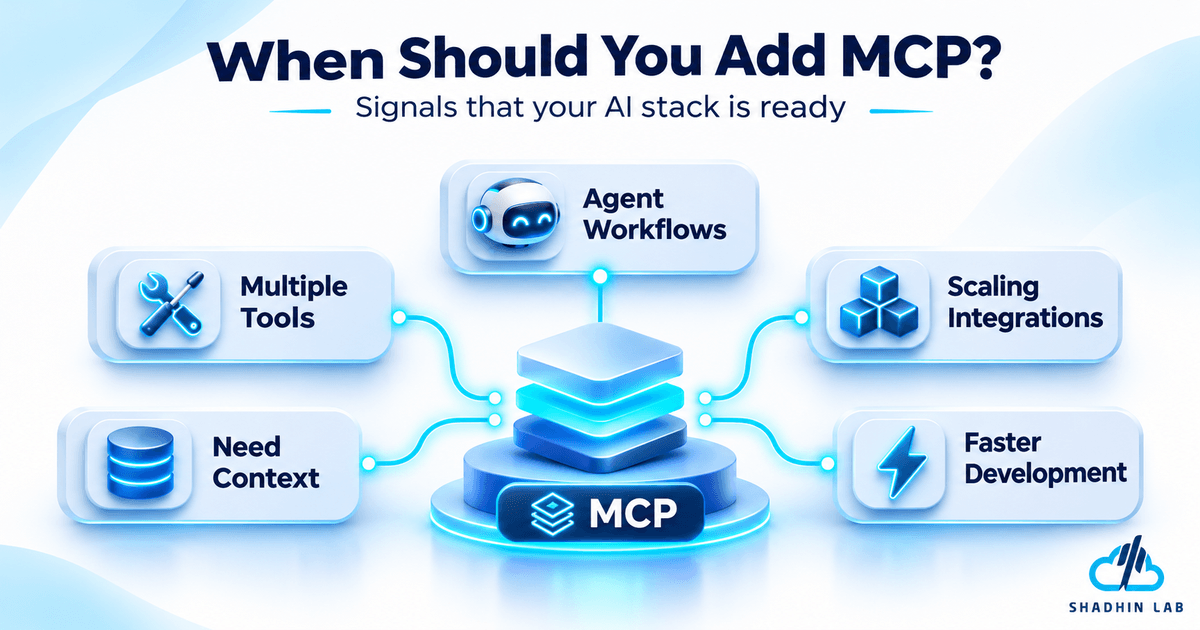
When Should You Add MCP to Your Application?
MCP makes sense when you want AI assistants to interact with your application’s functionality, expose business operations as discoverable tools, or support multiple AI clients through a common protocol.
However, adding MCP does not remove the need for security.
You still need authentication, authorization, input validation, permission checks, audit logging, rate limiting, and appropriate human approval for sensitive operations.
MCP should solve a genuine integration requirement, not simply be adopted because it is trending.
The Future: APIs and MCP Working Together
APIs are not disappearing. REST and GraphQL remain important foundations for application communication, business services, and data access.
MCP adds another layer that enables AI agents to discover and interact with those capabilities through a standardized interface.
The future is not necessarily about choosing between APIs and MCP. It is about combining established application architecture with new AI interaction methods.
The key question is no longer whether your application has APIs, but whether it is ready to be accessed by AI agents.

Shaif Azad
Shaif Azad Rahi is an AI/ML professional and Solution Engineer at Shadhin Lab, specializing in AI-powered solutions and scalable software systems, with a focus on applying AI to solve real-world business challenges.
Related Post
AI Agent Memory: Architecture and Implementation
An AI agent needs more than a language model to handle tasks that extend beyond a...

Zoho vs HubSpot: Which CRM Is Better for Your Business?
Choosing a customer relationship management (CRM) platform is about more than organizing contacts. Your CRM needs...

SaaS Security Checklist: 15 Essential Security Controls
A SaaS company may store customer information, process requests through shared infrastructure, and connect multiple services...
