
AI Agent Memory: Architecture and Implementation
Table of Contents
An AI agent needs more than a language model to handle tasks that extend beyond a single interaction. It must retain relevant information, recognize previous interactions, and use past experiences to make better decisions. This is where AI agent memory becomes important. Memory allows an agent to preserve useful context, retrieve information when needed, and maintain continuity across interactions.
However, implementing memory involves more than storing conversation history or connecting a vector database. It requires decisions about what information to retain, how to organize it, when to retrieve it, and how to update or remove outdated information.
Table of Contents
Key Takeaways
- AI agent memory allows agents to retain and retrieve useful information across interactions.
- Short-term and long-term memory describe how long information remains available, while semantic, episodic, and procedural memory describe different types of information.
- A memory architecture typically includes information extraction, validation, storage, retrieval, context assembly, and memory maintenance.
- Vector databases can support semantic retrieval, but they are not a complete memory architecture.
- Effective memory implementation requires clear retention rules, access controls, retrieval strategies, and ongoing evaluation.
- Privacy, outdated information, retrieval errors, and cross-user data leakage are important risks to address.
What Is AI Agent Memory?
AI agent memory is the mechanism that allows an AI agent to retain, organize, and retrieve information from previous interactions or experiences. Instead of treating every request as an isolated task, an agent can use relevant stored information to understand context and respond more consistently.
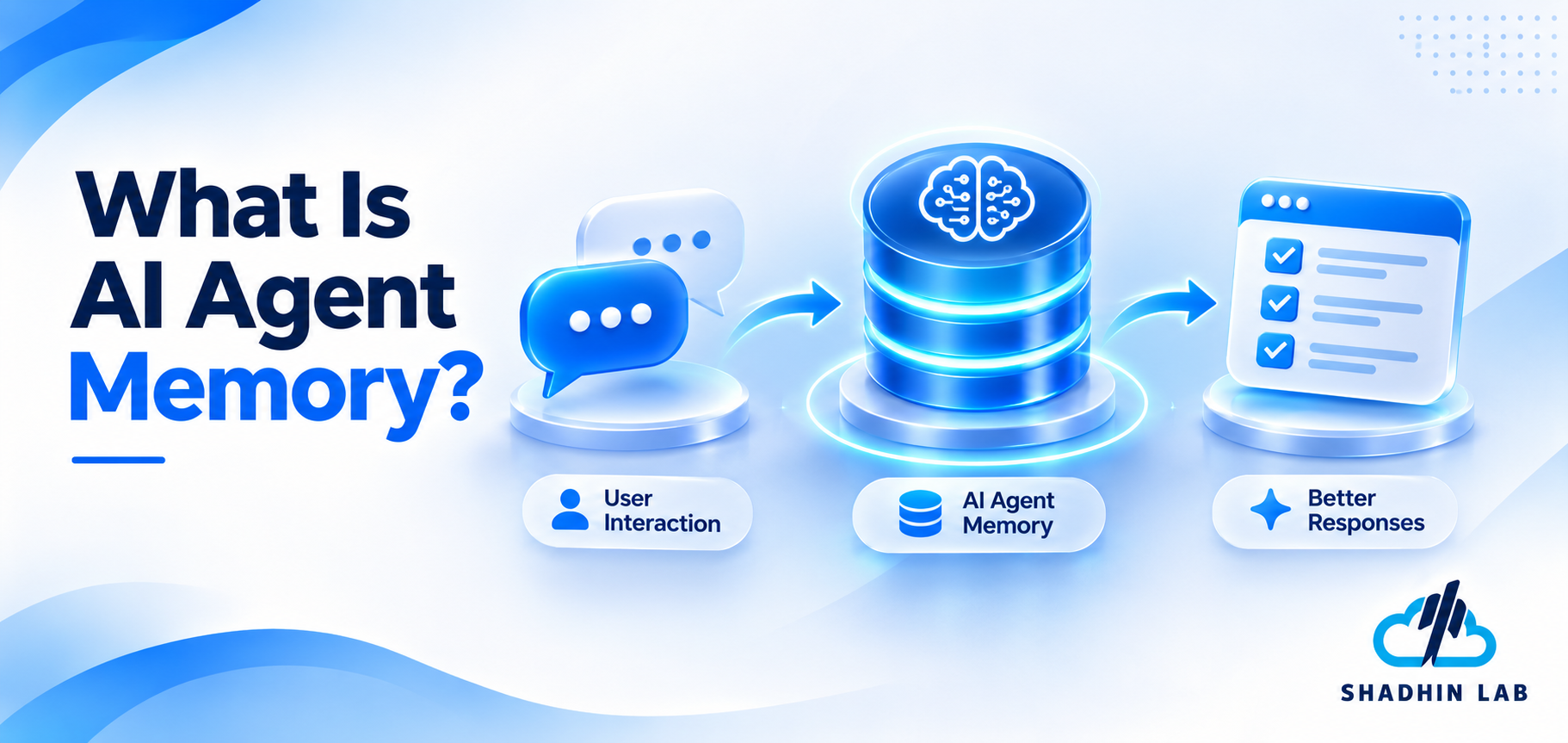
For example, consider a business assistant that helps a user prepare reports every week. During an earlier interaction, the user explains that reports should follow a particular format and prioritize revenue, customer acquisition, and retention metrics. Without memory, the assistant may need these instructions repeated each time. With an appropriate memory system, it can retain the relevant preferences and apply them to future reporting tasks.
Memory can also help agents track ongoing tasks, remember previous decisions, and recognize information that has changed. This is particularly useful for agents that support customer service, business operations, research, and multi-step workflows.
However, AI agent memory does not mean retaining every conversation indefinitely. A useful memory system selects information based on its future value, stores it in an appropriate form, and retrieves it when it is relevant to the current task.
AI Agent Memory vs. Context Window, Conversation History, and RAG
These concepts are related, but they serve different purposes.
| Concept | Primary purpose | How it works |
| Context window | Holds information available to the model during an interaction | Provides the text and other context the model can process at a given time |
| Conversation history | Preserves previous messages | Records earlier exchanges, which can be included in a later interaction |
| RAG | Retrieves external or stored knowledge | Searches relevant information and supplies it to the model |
| AI agent memory | Retains useful information from interactions and experiences | Selects, organizes, updates, and retrieves information for future agent behavior |
A context window is the model’s immediate working space. It has a capacity limit, so an agent cannot rely on keeping every past interaction in its active context.
Conversation history provides a record of previous exchanges, but a complete transcript is not necessarily an effective memory. It may contain temporary instructions, irrelevant details, repeated information, or outdated facts.
Retrieval-Augmented Generation (RAG) helps a model access relevant information from external sources. It can retrieve documents, product information, internal knowledge, or other reference material. Agent memory may use similar retrieval techniques, but its purpose can be different: retaining information about users, tasks, decisions, and previous experiences.
In practice, these components can work together. An agent may use conversation history for recent context, RAG for external knowledge, and persistent memory for information that should influence future interactions.
Types of Memory in AI Agents
AI agent memory can be classified by how long information is retained and by the type of information being stored. These classifications overlap rather than represent five completely separate storage systems.
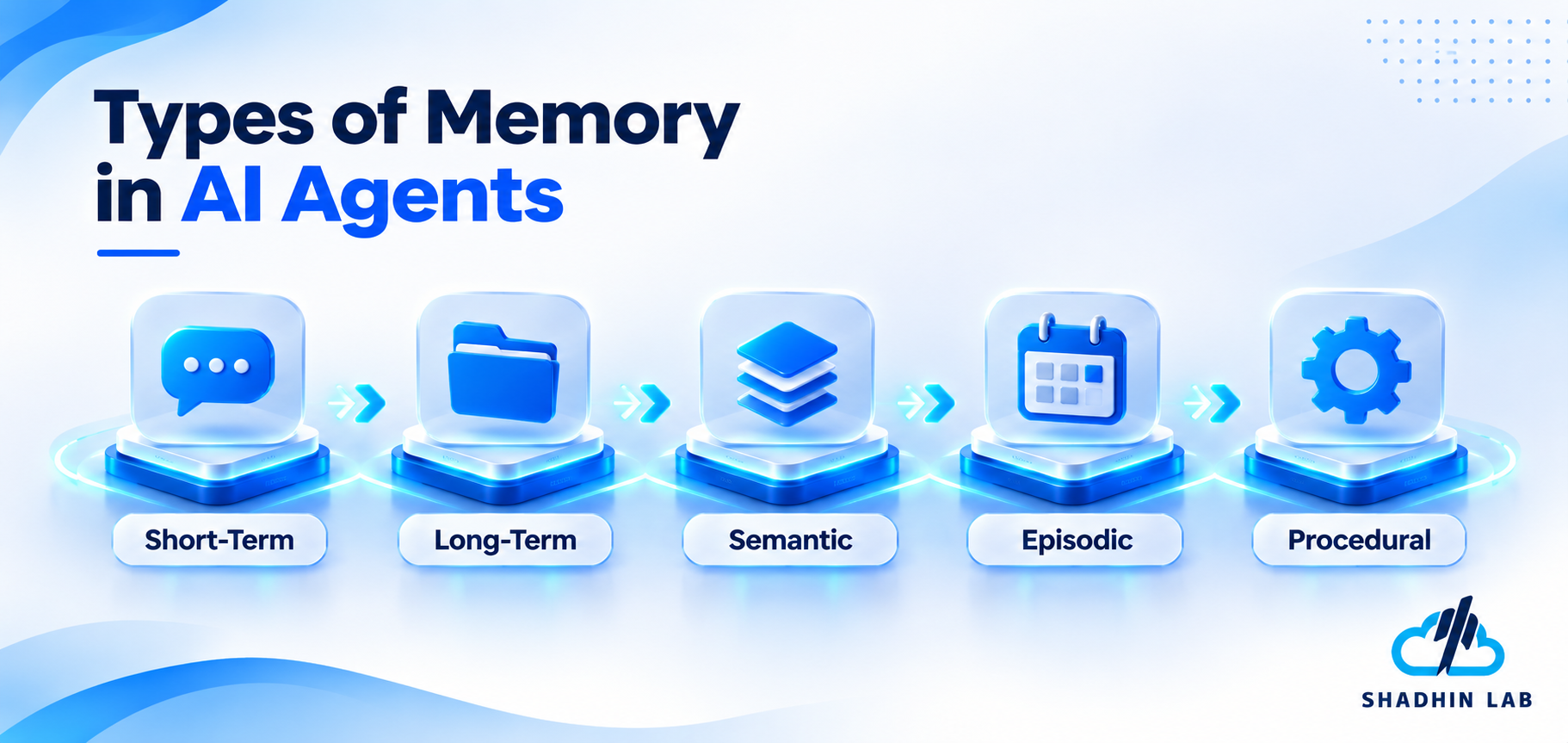
Understanding the differences helps developers decide what an agent should remember and how that information should be managed.
1. Short-Term Memory
Short-term memory stores information that an agent needs during a current interaction or task. It helps the agent maintain context without requiring the user to repeat information in every message.
For example, when an agent helps someone plan a business trip, it may temporarily retain the destination, travel dates, budget, and accommodation preferences. These details help it complete the current task.
Short-term memory is generally associated with an active session, conversation, or task. Depending on the architecture, it may be stored in the conversation state, application memory, or another temporary storage mechanism.
The important consideration is scope. Information needed for one task should not automatically become permanent user memory.
2. Long-Term Memory
Long-term memory retains useful information beyond the current interaction. It allows an agent to maintain continuity across sessions and use relevant knowledge from previous experiences.
For example, a customer support agent might remember a customer’s preferred communication channel or an unresolved issue. A business operations agent might retain recurring workflow preferences or previously approved decisions.
Long-term memory requires more careful management than temporary context. Stored information may become outdated, conflict with newer information, or no longer be relevant. Developers therefore need policies for updating, validating, and deleting persistent records.
3. Semantic Memory
Semantic memory stores factual and conceptual information. It represents knowledge that an agent may need to use across different tasks.
For example, a business assistant might retain facts about an organization’s products, internal terminology, service policies, or business structure. An agent supporting a particular user might retain confirmed preferences or recurring requirements.
Semantic memory focuses on what is known rather than the exact sequence of events through which the information was learned.
4. Episodic Memory
Episodic memory stores information about specific events, interactions, or experiences. It helps an agent refer to what happened previously and understand the context of earlier decisions.
For example, a project management agent might retain that a project deadline was changed during a previous meeting, including the reason for the change and the decision that followed.
This type of memory can be useful when an agent needs to understand the history of a task, explain a previous action, or continue work based on an earlier interaction.
5. Procedural Memory
Procedural memory stores information about how to perform tasks. It can include workflows, instructions, operating procedures, and learned patterns for completing recurring activities.
For example, a reporting agent might retain the sequence of steps required to prepare a weekly performance report. A customer service agent might follow an approved procedure for handling a particular category of support request.
Procedural memory is especially useful for agents that perform repeatable business processes. However, procedures should be reviewed and updated when organizational rules or workflows change.
Comparing the Different Memory Types
| Memory type | What it stores | Example |
| Short-term | Information needed during an active task or session | Current project requirements |
| Long-term | Information retained across interactions | A user’s recurring preferences |
| Semantic | Facts and conceptual knowledge | Company policies and product information |
| Episodic | Specific events and past experiences | A previous project decision |
| Procedural | Instructions and task procedures | Steps for preparing a report |
Short-term and long-term memory describe retention duration or scope. Semantic, episodic, and procedural memory describe information categories. A system can therefore contain long-term semantic memory, long-term episodic memory, or temporary procedural context. Treating these categories as mutually exclusive storage layers can lead to unnecessary architectural complexity.
AI Agent Memory Architecture: How It Works
An effective AI agent memory architecture needs to manage information throughout its lifecycle. It must decide what to remember, represent information in a useful format, store it safely, retrieve relevant records, and maintain those records as circumstances change.
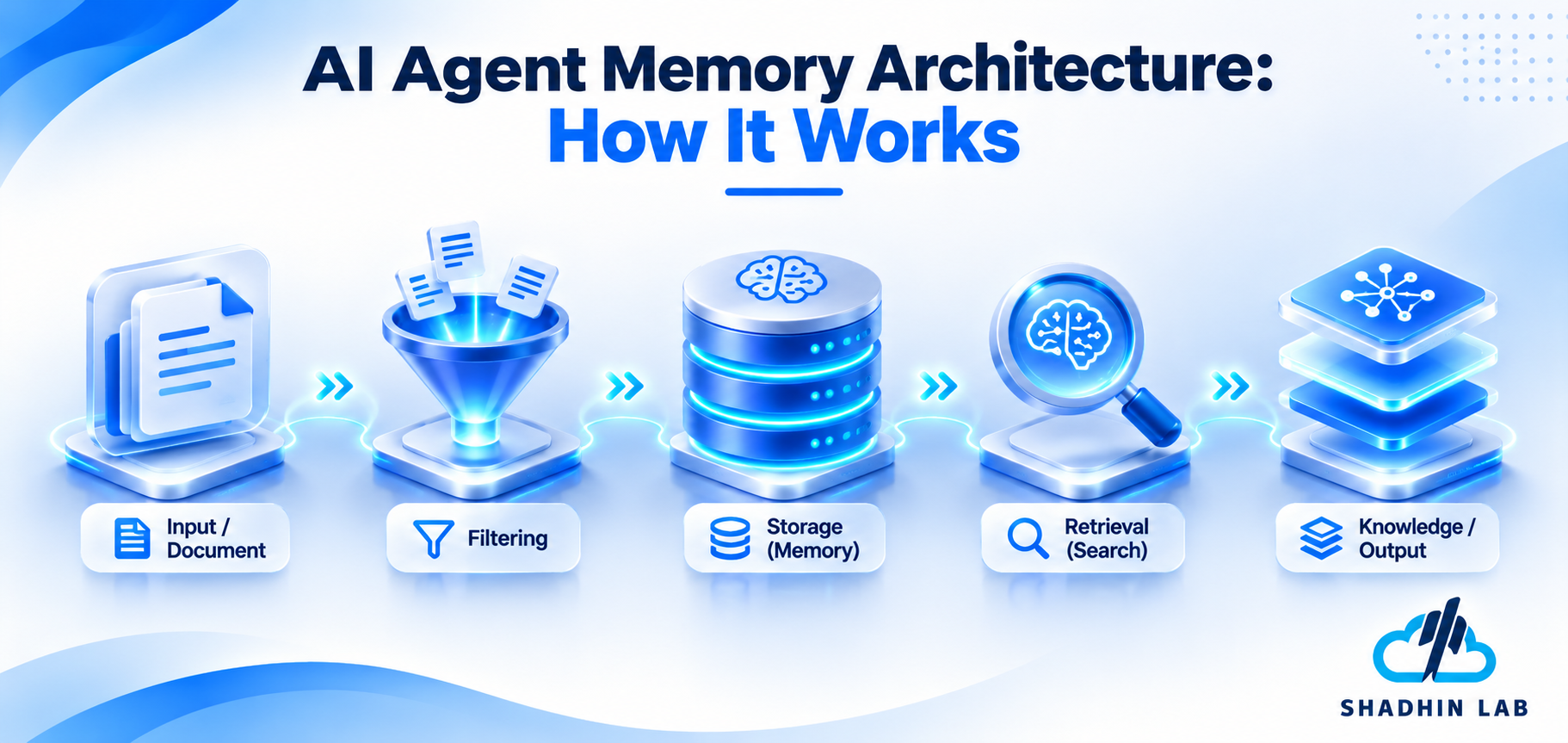
A typical architecture follows this process:
Input → Extraction → Validation → Representation → Storage → Retrieval → Context Assembly → Agent Action → Feedback and Update
Memory maintenance, including deduplication, conflict resolution, consolidation, and deletion, applies across this lifecycle.
1. Information Input
The process begins when an agent receives information from a user, an external system, or its own task execution.
Inputs can include:
- User messages and preferences
- Business documents and records
- Task requirements and instructions
- Previous decisions and interaction outcomes
- Information returned by connected tools and applications
Not every input should become a memory. A temporary question, one-time calculation, or irrelevant detail may have little future value.
The architecture should distinguish between information needed for the current task and information that may improve future interactions.
2. Information Extraction
The agent or an associated processing component identifies potentially useful information from incoming data.
For example, a user might say:
“I prefer weekly reports to include revenue, lead generation, and conversion performance.”
The system can identify this as a recurring reporting preference rather than treating it as an ordinary conversational sentence.
Extraction may involve identifying entities, preferences, decisions, task outcomes, dates, and relationships. The goal is to turn unstructured interaction data into information that can be evaluated and stored.
3. Validation and Filtering
Before information becomes persistent memory, the system should determine whether it is appropriate to retain.
This stage can consider:
- Relevance to future interactions
- Whether the information is explicit or inferred
- Confidence in the extracted information
- Whether it duplicates an existing record
- Whether it conflicts with previously stored information
- Whether storing it is permitted under privacy and retention policies
For example, if a user provides a new reporting preference that differs from an older one, the system should not blindly store both as equally current. It needs a rule for recognizing the newer instruction and handling the older record.
Validation also helps reduce incorrect assumptions. An agent should not automatically turn every statement into a permanent fact about a user or organization.
4. Memory Representation
Once information passes validation, it needs to be represented in a format that supports future retrieval and use.
A memory record may contain the information itself along with supporting metadata, such as:
- Memory content
- Memory category
- User, session, or organization scope
- Creation and update timestamps
- Source or origin
- Confidence or verification status
- Expiration or retention information
For instance, a recurring preference could be represented as a structured record identifying the preference, its owner, and when it was last confirmed.
Structured representation makes it easier to filter, update, and manage memories. It also helps prevent an agent from treating a temporary observation as a permanent instruction.
5. Memory Storage
The system stores validated information in an appropriate storage layer. The choice depends on the information type, access pattern, retrieval requirements, and scale of the application.
Common storage options include:
| Storage type | Suitable use | Considerations |
| Relational database | Structured facts, preferences, relationships, and metadata | Supports structured queries and consistency |
| Document database | Flexible memory records and semi-structured information | Useful when memory structures vary |
| Vector database | Semantic similarity search over embedded information | Requires suitable metadata and retrieval controls |
| Graph database | Connected entities, relationships, and dependencies | Useful when relationships are central to retrieval |
| Object or file storage | Documents, transcripts, and larger files | Often needs an indexing or retrieval layer |
A system may combine several storage technologies. For example, structured user preferences may live in a relational database, while semantic search operates over selected memory descriptions stored as vectors.
A vector database is not a complete memory system by itself. It does not automatically decide what should be remembered, resolve conflicting facts, enforce user permissions, or manage information retention.
6. Memory Retrieval
When the agent receives a new request, it needs to identify which stored information is relevant.
Retrieval may use several methods:
Semantic search: Finds information based on meaning rather than exact wording. This can help locate related preferences or experiences even when the current request uses different language.
Keyword or exact search: Finds records containing specific terms, identifiers, or values. This is important when precise information matters.
Metadata filtering: Restricts retrieval by attributes such as user, organization, memory type, date, or task.
Ranking: Orders retrieved records based on relevance and other criteria so that the most useful information can be prioritized.
For example, if a user asks an agent to prepare another weekly report, the system may retrieve reporting preferences, the latest reporting period, and relevant previous decisions. It should not retrieve unrelated personal or project information simply because it is semantically similar.
Semantic similarity alone is not enough. Retrieval must also consider scope, freshness, permissions, and the actual requirements of the current task.
7. Context Assembly and Agent Action
Retrieved memories are not automatically useful just because they have been found. The system must select and organize them into context that the agent can use.
This stage may combine:
- The current user request
- Recent conversation context
- Relevant short-term memory
- Selected long-term memories
- External information retrieved through RAG or connected tools
The agent then uses this assembled context to decide what to do or generate a response.
For example, a business assistant preparing a report can combine the current reporting period with the user’s saved formatting preferences and relevant business data. This provides continuity without requiring the entire history of previous conversations to be inserted into the model’s context.
8. Feedback and Memory Updates
Memory management continues after the agent takes action.
New interactions may confirm existing information, introduce updated preferences, or reveal that an earlier memory is no longer accurate.
The system should support:
- Updating existing records
- Removing duplicate information
- Resolving conflicting memories
- Consolidating related experiences
- Expiring temporary information
- Deleting information when required
This maintenance process is essential for long-running agents. Without it, persistent memory can gradually become less reliable as old information accumulates.
How to Implement Memory in an AI Agent
Implementing memory requires more than selecting a database or embedding model. Developers need to define the purpose of memory, determine its scope, design the storage and retrieval process, and evaluate whether the system behaves correctly.
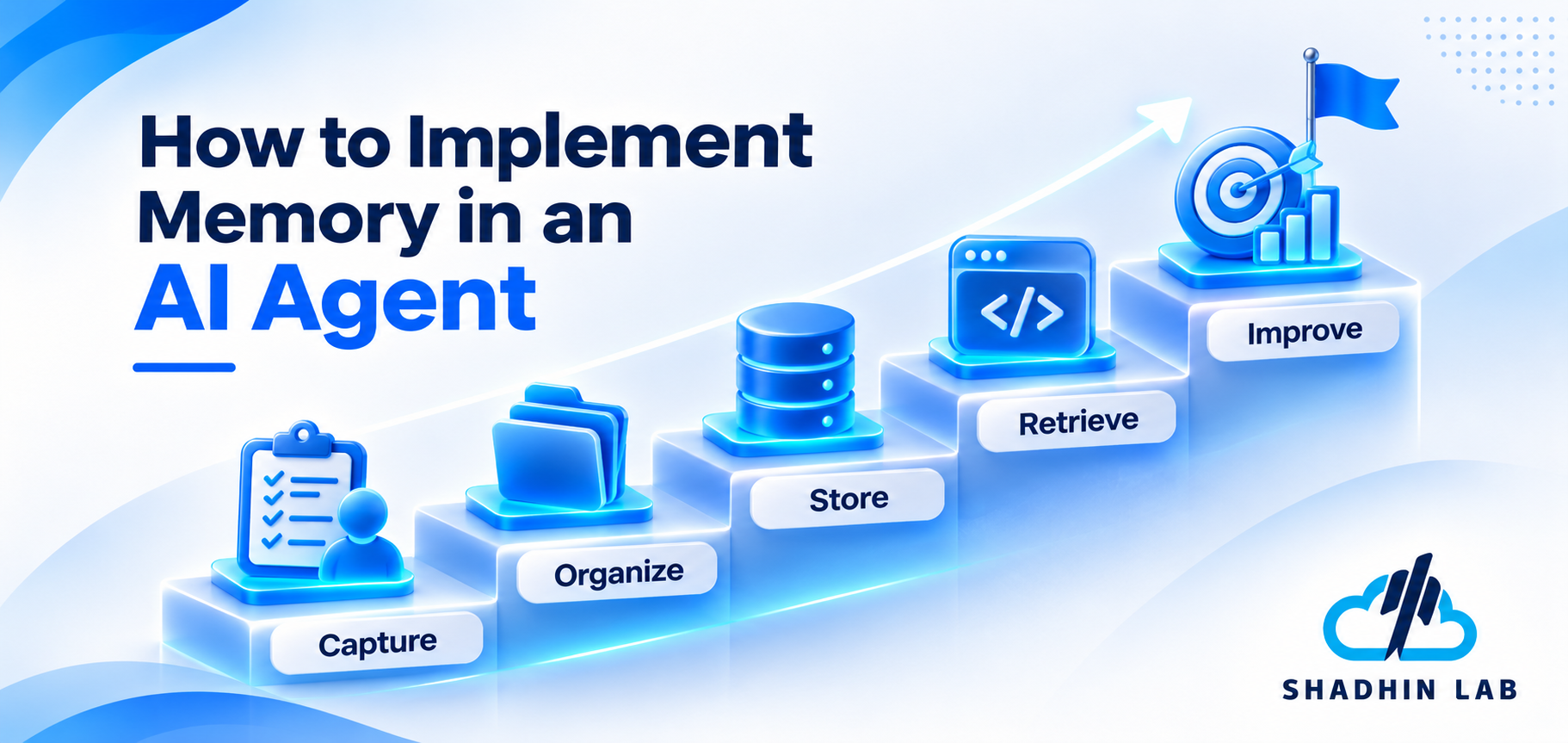
The following steps provide a practical implementation approach.
Step 1: Define What the Agent Should Remember
Start by identifying the information that can improve future agent behavior.
Different agents have different memory requirements. A customer support agent may need customer preferences and unresolved issues. A research agent may need previous findings and research decisions. A business workflow agent may need recurring instructions and task outcomes.
Define clear memory categories before choosing a storage technology.
It is also useful to identify what the agent should not remember. Temporary information, unnecessary personal details, unverified assumptions, and sensitive information without a valid purpose should not automatically become persistent memory.
A clear retention policy prevents the memory system from becoming a collection of unrelated conversation fragments.
Step 2: Define Memory Scope
Memory scope determines who or what can access a particular record.
Common scopes include:
| Scope | Description | Example |
| Session or thread | Available during a specific interaction | Details of the current support conversation |
| User | Retained for a particular user across sessions | A user’s preferred report format |
| Agent | Shared knowledge used by a specific agent | Instructions for completing a recurring task |
| Organization | Information available within an authorized business environment | Approved company procedures |
Scope is an important architectural decision because information should not be shared beyond its intended audience.
For example, a preference saved for one customer should not become available to another customer. Similarly, an agent operating across multiple organizations must keep each organization’s records isolated.
Step 3: Choose the Storage and Retrieval Approach
The next decision is how memory will be stored and retrieved.
A structured database may be suitable for information such as user preferences, account settings, and confirmed facts. A vector database may help retrieve semantically related experiences or unstructured memory descriptions. A graph database may be useful when relationships between people, projects, decisions, and entities are important.
The right choice depends on the use case. A simple assistant may not need multiple databases or a complex retrieval pipeline. A multi-agent business system may require several storage layers with different access and retrieval rules.
Developers should avoid adding infrastructure without a clear requirement. The architecture should solve the memory problem rather than introduce unnecessary operational complexity.
Step 4: Design the Memory Write Process
The write process determines how new information enters persistent memory.
A practical process should distinguish between explicit user instructions, extracted preferences, confirmed facts, and information inferred from task outcomes.
For example, an agent may receive a direct instruction to remember a preferred report format. This is different from inferring a preference because the user requested the same format once.
The system should also define how it handles existing records. If new information updates an older preference, it should modify or supersede the relevant memory instead of creating multiple contradictory records.
Memory writes can happen immediately or through an asynchronous process, depending on the application’s requirements. Immediate writes may be appropriate for explicit preferences that must be available in the next interaction. Asynchronous processing may be useful for extracting and consolidating information from longer interactions.
Regardless of the approach, the write process should include validation, deduplication, source tracking, and appropriate access controls.
Step 5: Build a Context-Aware Retrieval Process
The retrieval process determines which memories are supplied to the agent for a particular task.
Start by identifying the types of information each task needs. A customer support request may require account preferences and recent support history. A reporting task may require saved formatting instructions and previous reporting decisions.
Retrieval should apply scope and permission filters before presenting information to the agent. It should also consider freshness and relevance.
Developers should avoid retrieving every available memory for every request. Excessive context can increase processing costs, introduce irrelevant information, and make the agent less consistent.
A useful retrieval system returns a limited set of relevant records with enough context to understand their meaning and source.
Step 6: Evaluate and Maintain Memory
Memory implementation is not complete when the system successfully stores and retrieves information. It must also be evaluated over time.
Useful evaluation areas include:
Retention accuracy: Does the agent retain the information it is supposed to remember without storing unnecessary details?
Retrieval accuracy: Does it retrieve the right information for a given request?
Update behavior: Can it replace outdated preferences and resolve conflicting records?
Isolation and permissions: Can users access only the memories they are authorized to see?
Latency and cost: Does memory retrieval introduce unacceptable delays or infrastructure costs?
Deletion and retention: Can the system remove information when required and enforce its retention policies?
Testing should include realistic interactions across multiple sessions. A memory system may appear to work in a short demonstration but fail when information becomes outdated, multiple users share an environment, or several similar records compete for retrieval.
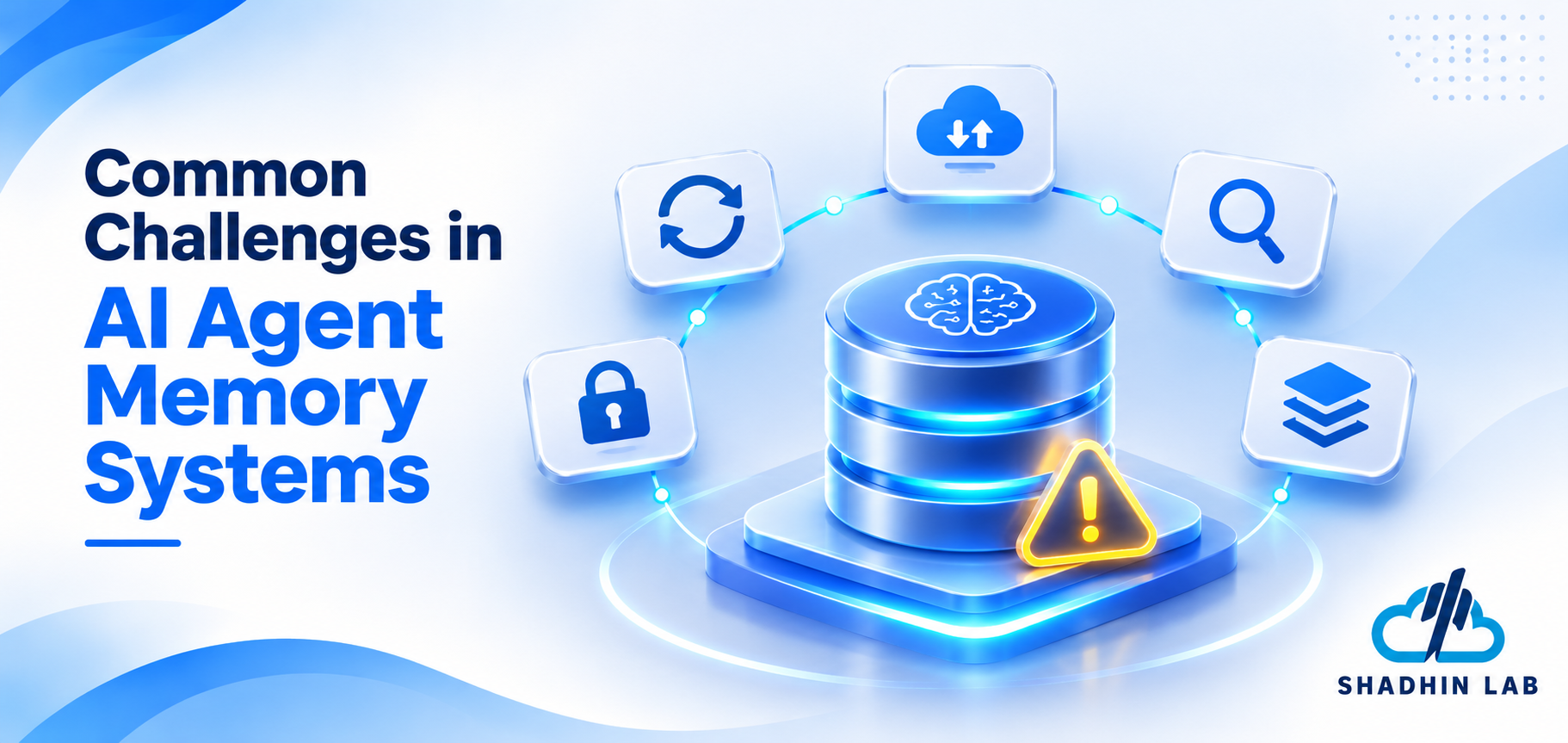
Common Challenges in AI Agent Memory Systems
Memory can make an agent more useful, but poorly designed memory can also introduce reliability, privacy, and performance problems.
1. Irrelevant or Excessive Memories
Storing too much information can make retrieval less effective. An agent may retrieve unnecessary details, consume more context, and struggle to identify what matters.
The solution is selective retention. Define what information has future value and apply filtering before storing it. Periodically review stored records and remove information that is no longer useful.
2. Conflicting and Outdated Information
A user’s preferences, business processes, and project requirements can change. If older memories remain active without being updated, the agent may follow instructions that are no longer valid.
Memory records should include timestamps and source information. The system should also define how newer confirmed information supersedes older records and how unresolved conflicts are handled.
3. Retrieval Errors
A memory system may retrieve information that is semantically related but not actually relevant to the current task. It may also miss exact information because the retrieval method relies too heavily on semantic similarity.
Combining semantic search with keyword search, metadata filtering, and ranking can improve retrieval quality. Developers should evaluate retrieval against realistic queries rather than assuming that a successful database search guarantees useful context.
4. Privacy and Cross-User Data Leakage
Persistent memory can contain user preferences, business information, and other sensitive records. Incorrect access controls may expose one user’s information to another user or organization.
Memory systems need authorization checks, tenant isolation, and clear ownership rules. Data should be retrieved only within the appropriate user or organizational scope. Retention and deletion policies should also reflect the application’s privacy and compliance requirements.
5. Latency and Infrastructure Costs
Every memory operation can introduce additional processing. Extraction, embedding generation, database queries, reranking, and context assembly may increase response time and infrastructure costs.
Not every interaction needs persistent memory retrieval. Developers can use task-specific retrieval rules, efficient indexing, caching where appropriate, and selective memory updates to reduce unnecessary operations.
The goal is not to retrieve the maximum amount of information. It is to provide the agent with the right information at the right time.
Best Practices for Building Reliable AI Agent Memory
A reliable memory system should be designed around the agent’s actual responsibilities rather than the capabilities of a particular database or framework.
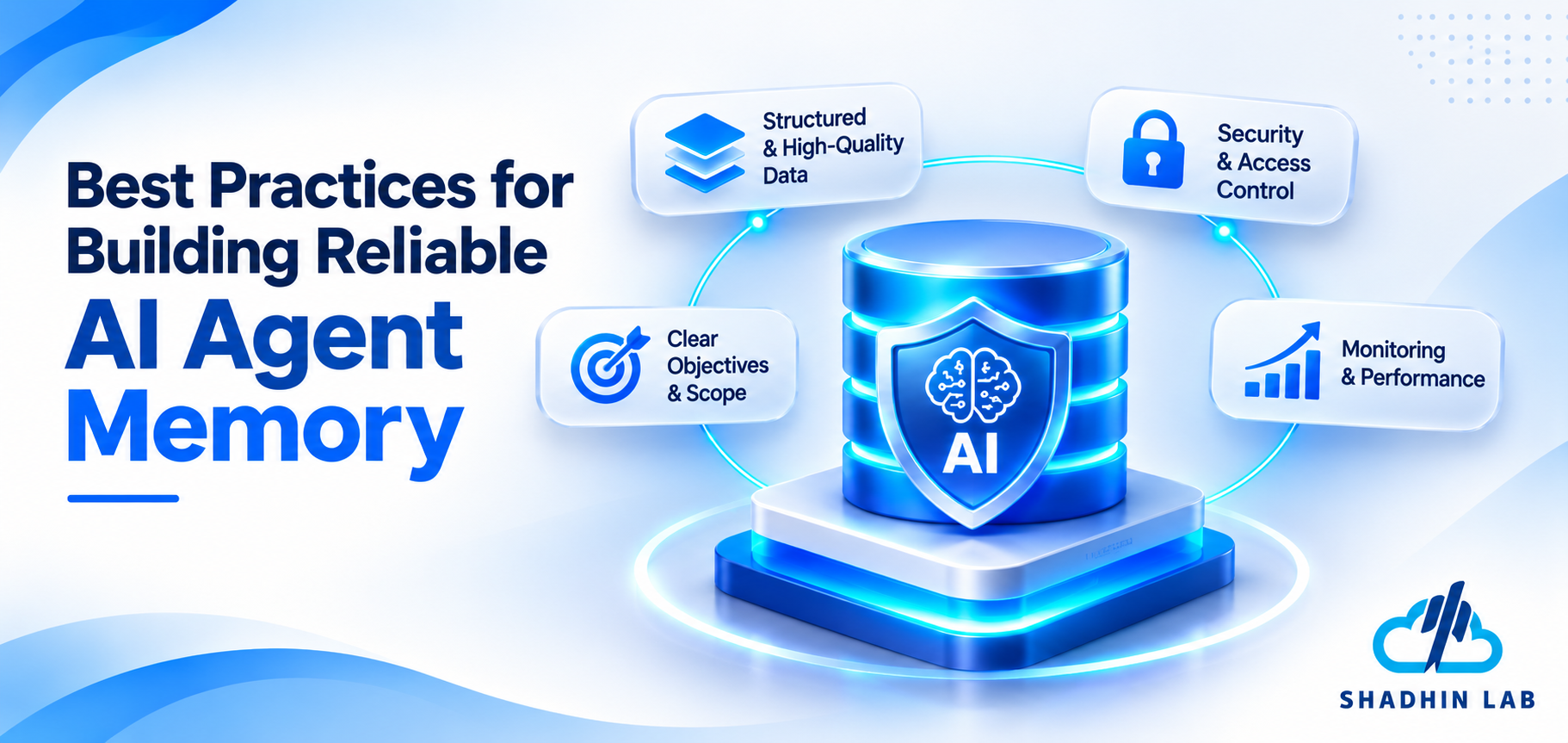
Store information with future value. Prioritize confirmed preferences, important decisions, recurring instructions, and task outcomes. Avoid treating every message as a permanent memory.
Separate temporary context from persistent memory. Information needed for a current session should not automatically be retained indefinitely. Define clear boundaries between session-level and long-term records.
Use structured records where precision matters. Preferences, dates, identifiers, and confirmed facts often benefit from structured storage and metadata. Semantic retrieval can complement this structure rather than replace it.
Use vector search selectively. Vector databases are useful when retrieving information based on meaning. They are not necessary for every memory type, particularly when exact values or structured filters are more important.
Track sources and timestamps. Memory records should indicate where information came from and when it was created or updated. This makes validation and conflict resolution easier.
Apply access controls at retrieval time. Enforce user, agent, and organizational boundaries before memory reaches the model. Do not rely only on instructions in the model prompt to protect private information.
Maintain and update memories. Implement processes for deduplication, consolidation, expiration, conflict handling, and deletion. A memory system should remain useful as information changes.
Evaluate the complete lifecycle. Test extraction, storage, retrieval, updates, permissions, and deletion. Measuring only whether information can be stored does not establish that the memory system works reliably.
Frequently Asked Questions About AI Agent Memory
What is memory in an AI agent?
Memory in an AI agent is a system for retaining, organizing, and retrieving useful information from previous interactions or experiences. It helps the agent maintain context, remember relevant preferences, and continue tasks across multiple interactions.
How does AI agent memory work?
An AI agent memory system identifies potentially useful information, validates it, stores it in an appropriate format, and retrieves relevant records when needed. The retrieved information is added to the agent’s current context so it can inform the next action or response. The system also needs to update or remove outdated information.
What is the difference between short-term and long-term memory in AI agents?
Short-term memory holds information needed for an active session or task. Long-term memory retains selected information across multiple sessions or interactions. Short-term memory supports immediate continuity, while long-term memory allows an agent to use relevant information from previous experiences.
What is the difference between RAG and AI agent memory?
RAG retrieves relevant information from external or stored knowledge sources and provides it to a model during generation. AI agent memory focuses on retaining and managing information that may influence future agent behavior, such as preferences, decisions, and previous task experiences. An agent memory system can use RAG-style retrieval techniques, but the two concepts are not identical.
Does an AI agent need a vector database for memory?
No. A vector database is useful when the system needs semantic similarity search, especially over unstructured information. However, structured databases, document stores, and graph databases may be more suitable for other memory requirements. Some systems combine multiple storage technologies.
How can an AI agent remember information across conversations?
An agent can maintain persistent memory by storing selected information in an external storage system and retrieving relevant records when a new conversation begins. The application must associate memories with the correct user or organization and apply appropriate access controls.
Can AI agent memory be updated or deleted?
Yes. A well-designed memory system should support updating existing records, resolving conflicting information, removing duplicates, and deleting information when required. Memory management should be part of the architecture rather than an optional feature added later.
Conclusion
AI agent memory helps transform isolated interactions into more continuous and context-aware experiences. However, effective memory depends on more than retaining conversation history or connecting a vector database.
Developers need to define what an agent should remember, establish appropriate memory scopes, choose suitable storage and retrieval methods, and maintain information as it changes. Privacy, access control, retrieval accuracy, and deletion policies are equally important.
By designing memory around real application requirements, development teams can build agents that use previous interactions more effectively without accumulating unnecessary or unreliable information.
For businesses exploring practical AI systems, ShadhinLab’s AI solutions and services can be a starting point for discussing AI-powered applications and workflows.

Shaif Azad
Shaif Azad Rahi is an AI/ML professional and Solution Engineer at Shadhin Lab, specializing in AI-powered solutions and scalable software systems, with a focus on applying AI to solve real-world business challenges.
Related Post

Zoho vs HubSpot: Which CRM Is Better for Your Business?
Choosing a customer relationship management (CRM) platform is about more than organizing contacts. Your CRM needs...

SaaS Security Checklist: 15 Essential Security Controls
A SaaS company may store customer information, process requests through shared infrastructure, and connect multiple services...
ERP vs CRM: Which Is Right for Your Business?
Imagine a growing business where sales representatives track leads in spreadsheets while the operations team manages...
