
AI Automation Use Cases to Boost Efficiency
Table of Contents
Are you overwhelmed by repetitive tasks that consume hours of your valuable time each day? Businesses across every industry are discovering powerful ways to automate these processes while improving accuracy and reducing costs. Picture your team focusing entirely on strategic, creative work while intelligent systems handle routine operations seamlessly.
Many organizations experience frustration with manual workflows that slow productivity and increase operational expenses. You might wonder how other companies manage to scale efficiently while maintaining quality standards. The answer lies in AI automation use cases that are transforming how businesses operate across every sector.
By the end of this guide, you will understand exactly how AI automation can revolutionize your specific industry operations. We will explore together the most impactful AI automation use cases that deliver measurable results. You will discover practical applications that you can implement immediately to transform your business processes.
Table of Contents
What Is AI Automation?
Have you wondered what makes AI automation different from the basic automation tools you might already use? AI automation represents the fusion of artificial intelligence with workflow automation to streamline processes, reduce manual effort, and enhance decision-making capabilities. Unlike traditional automation that follows rigid rules, AI-powered systems analyze data, recognize patterns, and adapt to changing inputs dynamically.
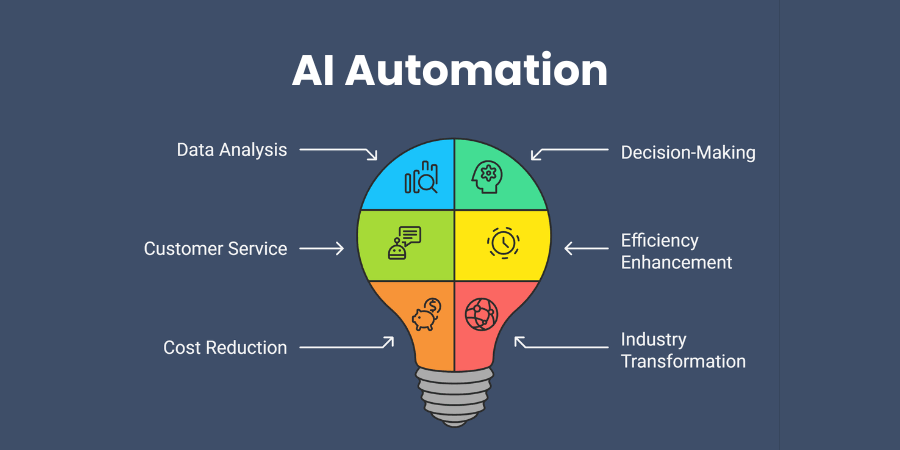
When you implement AI automation in your organization, you are not just eliminating repetitive tasks. You are creating intelligent systems that learn from your data and improve performance over time. This technology enables you to automate complex processes that previously required human judgment and intervention.
The most common AI automation use cases you will encounter include customer service chatbots that understand context and emotion. Automated data processing systems extract insights from unstructured information while AI-powered marketing campaigns personalize content for individual customers. Intelligent workflow management platforms optimize resource allocation across your entire organization.
Core Technologies Behind AI Automation
Wondering how these intelligent systems actually work behind the scenes for your business operations? The foundation of effective AI automation relies on several key technologies working together seamlessly. Machine learning algorithms enable pattern recognition and predictive insights that help your systems make intelligent decisions. Natural language processing allows your automation tools to understand and respond to text and conversations naturally.
Robotic process automation executes repetitive digital tasks with precision and speed that surpasses human capabilities. AI agents manage multi-step workflows autonomously, coordinating between different systems and processes throughout your organization. When you combine these technologies, you create powerful automation solutions that transform how your business operates.
You can think of these technologies as building blocks that create increasingly sophisticated automation capabilities. Each component enhances the others, resulting in systems that truly understand your business context and requirements.
Why Businesses Are Adopting AI Automation
Are you feeling pressure to operate more efficiently while managing increasing volumes of data and customer interactions? You are not alone in facing these challenges that affect organizations worldwide. Organizations are turning to AI automation to improve efficiency, reduce operational costs, and scale their operations effectively.
The primary motivations driving adoption include eliminating repetitive manual tasks that consume valuable employee time. Improving operational speed and accuracy across all departments becomes essential for competitive advantage. Enhancing customer experiences through personalized and responsive service creates lasting business relationships. Managing large volumes of data that would overwhelm traditional processing methods requires intelligent automation solutions.
You will find that AI automation serves as a strategic capability for digital transformation initiatives. Companies implementing these solutions report significant improvements in productivity, cost reduction, and employee satisfaction. Your team members can focus on creative problem-solving and strategic initiatives when routine tasks are handled automatically.
AI Automation Use Cases Across Business Functions
What specific applications can you implement in your organization to achieve immediate results for your operations? Let us explore the most impactful AI automation use cases across different business functions. Each application offers unique benefits that you can tailor to your specific operational needs.
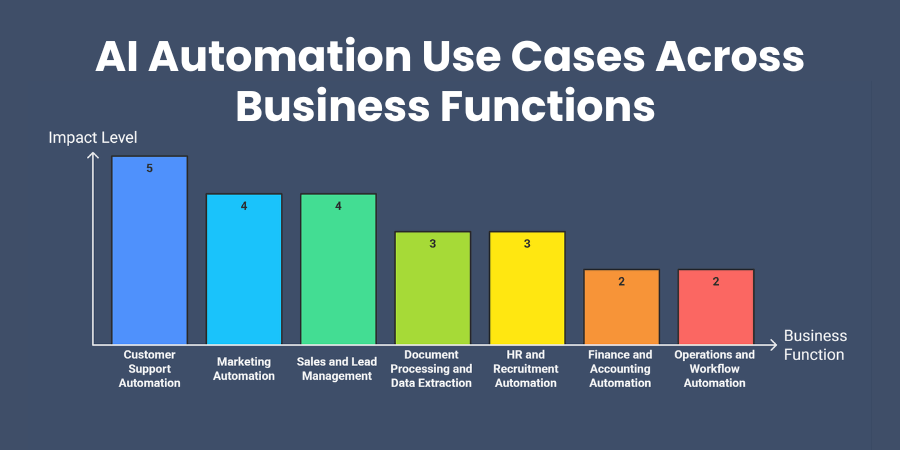
Customer Support Automation
Have you ever wished your customer support team could provide instant, accurate responses around the clock? AI chatbots and virtual assistants are revolutionizing customer interactions by automating responses, handling frequently asked questions, and routing complex issues to appropriate human agents.
Key applications you can implement include automated support responses that resolve common inquiries instantly. Intelligent ticket classification and routing based on urgency and complexity streamlines your support workflow. 24/7 customer assistance maintains service quality regardless of time zones or staffing limitations. Sentiment analysis identifies frustrated customers and escalates appropriately to prevent service issues.
Zendesk implemented AI automation and reduced response times by 67% while improving customer satisfaction scores significantly. You can achieve similar results by starting with your most common customer inquiries and gradually expanding automation capabilities.
Marketing Automation
Are you struggling to personalize marketing campaigns for thousands of customers while maintaining relevance and timing? AI helps marketing teams automate campaigns and create personalized customer engagement at scale effectively. You can deliver the right message to the right person at the optimal moment.
Transformative applications include personalized email campaigns that adapt content based on individual behavior patterns and preferences. Dynamic ad targeting optimizes spending and improves conversion rates across all marketing channels. Customer segmentation and predictive analytics identify high-value prospects for targeted outreach campaigns. Content generation maintains brand voice while scaling production to meet increasing demand.
Netflix uses AI automation to personalize recommendations for over 200 million subscribers, resulting in 80% of viewer engagement. You can apply similar personalization strategies to your customer base, regardless of size or industry.
Sales and Lead Management
What if your sales team could focus entirely on closing deals while AI handles lead qualification? AI automation streamlines sales workflows by managing lead scoring, automating follow-up communications, and updating CRM systems automatically. You can accelerate your sales cycle while improving conversion rates.
Powerful use cases you can implement include automated lead scoring that prioritizes prospects based on conversion probability. Sales pipeline management tracks progress and identifies bottlenecks that slow deal closure. AI-driven recommendations suggest optimal next actions for each prospect in your pipeline. Predictive analytics forecast sales performance and identify opportunities for revenue growth.
Salesforce reports that companies using AI automation in sales see 37% higher conversion rates than traditional approaches. You can start by automating your lead qualification process and gradually expand to more complex sales activities.
Document Processing and Data Extraction
Are you tired of manual data entry errors and the time consumed processing invoices, contracts, and forms? AI systems automatically extract and process data from documents, reducing manual effort and improving accuracy significantly. This capability is particularly valuable in finance, legal, and administrative operations across your organization.
Essential applications include invoice processing that extracts key information and routes for approval automatically. Contract analysis identifies important clauses and potential risks before signing agreements. Form processing converts unstructured data into actionable insights for decision-making. Compliance monitoring ensures documents meet regulatory requirements without manual review.
JPMorgan Chase implemented AI document processing and reduced contract review time from 360,000 hours to seconds. You can achieve similar efficiency gains in your document-heavy processes.
HR and Recruitment Automation
How much time does your HR team spend on repetitive tasks that could be automated effectively? AI supports hiring and employee management processes by automating resume screening, candidate communication, and onboarding workflows. You can improve hiring quality while reducing time-to-fill positions significantly.
Impactful automation opportunities include resume screening that identifies qualified candidates based on specific criteria and requirements. Candidate communication maintains engagement throughout the hiring process without manual intervention. Interview scheduling coordinates availability across multiple stakeholders automatically. Onboarding workflows ensure consistent new employee experiences that improve retention rates.
Unilever automated their initial recruitment screening and reduced hiring time by 75% while improving candidate diversity. You can implement similar improvements in your recruitment process.
Finance and Accounting Automation
Are manual financial processes creating bottlenecks in your organization that slow business operations? AI helps finance teams manage routine processes including invoice processing, expense tracking, fraud detection, and financial forecasting. You can improve accuracy while reducing processing time significantly across all financial operations.
Critical applications you should consider include automated invoice processing that handles approval workflows without delays. Expense tracking categorizes and validates employee submissions automatically for faster reimbursement. Fraud detection identifies suspicious transactions in real-time to prevent losses. Financial forecasting provides accurate predictions for planning and budgeting purposes.
American Express uses AI automation to analyze 100 billion transactions annually for fraud detection purposes. You can implement similar protection for your financial operations.
Operations and Workflow Automation
What internal processes consume the most time in your organization and limit productivity growth? AI-powered systems automate workflows across departments, including task routing, approval processes, and inventory management. You can create seamless operations that adapt to changing business needs automatically.
Transformative workflow applications include task routing that assigns work based on expertise and availability. Approval workflows expedite decision-making processes across all departments. Inventory management optimizes stock levels and reduces waste through predictive analytics. Resource allocation maximizes efficiency across projects and initiatives.
Benefits of AI Automation
Why should you prioritize AI automation implementation in your organization for competitive advantage? The measurable business outcomes demonstrate clear value that you can achieve across multiple dimensions.
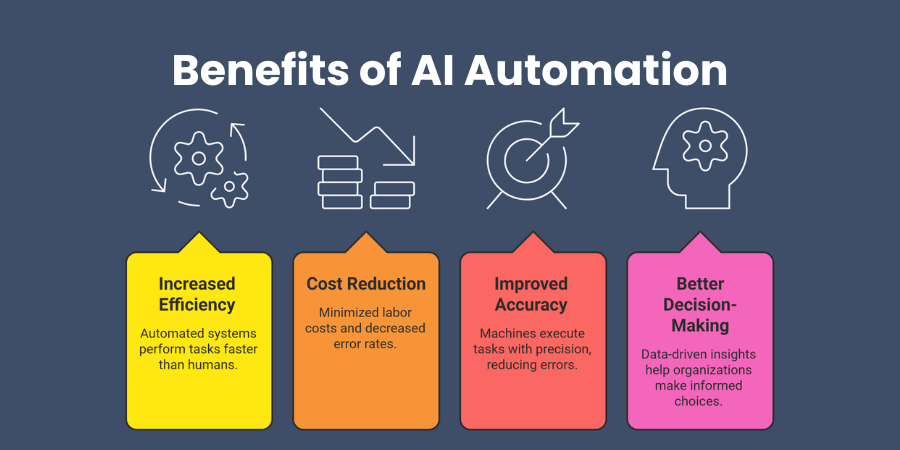
Increased Efficiency
AI automation eliminates repetitive tasks and accelerates workflows throughout your organization for improved productivity. You will see immediate improvements in processing speed and task completion rates. Teams report productivity increases of 40-60% when implementing comprehensive automation strategies across departments.
Cost Reduction
Automating routine processes reduces operational costs and resource requirements significantly while maintaining service quality. You can reallocate human resources to higher-value activities that drive business growth. Organizations typically see 20-30% cost reductions in automated processes within the first year.
Improved Accuracy
AI systems reduce human errors in data processing and task execution across all business functions. You will experience fewer mistakes and improved consistency across operations. Error rates often decrease by 80-90% in automated processes compared to manual alternatives.
Better Decision-Making
AI analyzes large datasets and provides insights that support strategic decisions for business growth. You gain access to real-time information and predictive analytics that improve planning accuracy. Decision-making speed improves while maintaining quality and reducing risks.
AI Automation Across Different Industries
How does AI automation apply specifically to your industry and unique business challenges? Different sectors leverage these technologies in unique ways that address industry-specific challenges and opportunities.
Retail and eCommerce organizations use personalized recommendation engines and inventory automation to improve customer experiences. Amazon attributes 35% of revenue to AI-powered recommendations that increase customer satisfaction. Healthcare providers implement patient data processing and appointment management systems that improve care quality. Mayo Clinic reduced appointment scheduling time by 50% through automation.
Financial institutions deploy fraud detection and transaction monitoring systems that protect customers while streamlining operations. Bank of America processes over 2 billion transactions monthly using AI automation. Manufacturing companies utilize predictive maintenance and production optimization to reduce downtime and improve quality. General Electric saves millions annually through AI-powered predictive maintenance.
Tip: Start measuring baseline performance before implementing automation – you will clearly demonstrate ROI and build support for expansion.
Challenges of AI Automation
What obstacles might you encounter when implementing AI automation in your specific business environment? Understanding potential challenges helps you prepare effective solutions and set realistic expectations for implementation.
Integration with Existing Systems
Connecting AI solutions with legacy software can require technical expertise and careful planning for success. You may need to upgrade infrastructure or develop custom integrations. Planning integration requirements early prevents delays and cost overruns during implementation.
Data Quality Issues
AI systems depend heavily on accurate and structured data for optimal performance and reliable results. You must ensure data quality before implementing automation solutions. Poor data quality leads to unreliable results and reduced system effectiveness.
Change Management
Organizations must adapt processes and train teams to work alongside automated systems for maximum benefit. You need comprehensive change management strategies that address employee concerns and provide adequate training. Successful implementation requires strong leadership support and clear communication throughout the organization.
How to Implement AI Automation
What steps should you take to successfully implement AI automation in your organization? Following a structured approach increases your chances of success and maximizes return on investment.
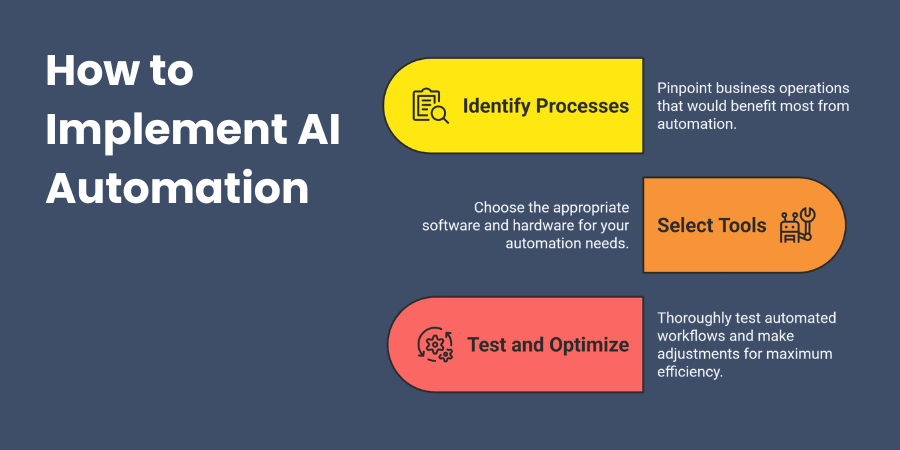
Identify High-Impact Processes
Focus on repetitive tasks that consume significant time and resources in your organization. You should prioritize processes with clear metrics and measurable outcomes. Start with areas where automation provides immediate, visible benefits to build momentum.
Select the Right Automation Tools
Choose platforms that integrate well with your existing systems and support your specific requirements. You need solutions that scale with your organization and provide reliable support. Evaluate vendors based on functionality, integration capabilities, and long-term viability.
Test and Optimize Workflows
Deploy automation gradually and continuously improve performance using analytics and feedback from users. You should monitor results closely and make adjustments based on actual performance. Successful implementation requires ongoing optimization and refinement.
Future of AI Automation
What exciting developments can you expect in AI automation technology for your business? Emerging trends will create new opportunities for business transformation and competitive advantage.
Autonomous AI Agents
AI systems capable of managing complex, multi-step workflows with minimal human intervention are becoming reality. You will see agents that coordinate across multiple systems and make sophisticated decisions independently.
Hyperautomation
The integration of AI, RPA, and advanced analytics will automate entire business processes end-to-end. You can expect seamless automation that spans departments and functions.
Intelligent Decision Automation
AI systems will not only automate tasks but also make data-driven decisions in real-time. You will have access to systems that adapt strategies based on changing conditions automatically.
Tip: Pilot automation with non-critical processes first – you will learn valuable lessons without risking essential operations.
How Shadhin Lab Enables AI Automation
Are you ready to transform your organization with AI automation but need expert guidance? Shadhin Lab partners with organizations to implement AI-driven automation solutions that deliver measurable results. Our expertise spans AI strategy development, workflow automation design, system integration, and scalable deployment.
You can leverage our experience to avoid common implementation pitfalls and accelerate your automation journey. We provide comprehensive support from initial assessment through full deployment and optimization.
Frequently Asked Questions
What is the typical ROI timeline for AI automation projects?
You can expect to see initial returns within 3-6 months for most automation projects. Full ROI typically occurs within 12-18 months, depending on project scope and complexity. The key is starting with high-impact, low-complexity processes that demonstrate quick wins.
How do I ensure data security when implementing AI automation?
You should work with vendors that provide enterprise-grade security features and compliance certifications. Implement proper access controls, data encryption, and monitoring systems. Regular security audits and employee training are essential components of your security strategy.
What skills does my team need to manage AI automation systems?
You will need team members with basic technical skills and process optimization knowledge. Most modern AI automation platforms are designed for business users, not just technical experts. Training and vendor support help bridge any skill gaps during implementation.
Can small businesses benefit from AI automation?
Absolutely! You can start with simple automation tools that address specific pain points in your organization. Many cloud-based solutions offer affordable pricing models that scale with your business growth. Small businesses often see faster implementation and higher relative impact.
How do I measure the success of AI automation initiatives?
You should establish baseline metrics before implementation and track improvements in efficiency, accuracy, and cost reduction. Key performance indicators include processing time, error rates, cost per transaction, and employee satisfaction. Regular reporting helps demonstrate value and identify optimization opportunities.
Conclusion
You are now equipped with comprehensive knowledge about AI automation use cases that can transform your business operations. The opportunities ahead of you are substantial, from improving customer experiences to streamlining internal processes and reducing operational costs.
What will you try first? Which AI automation use case resonates most with your current challenges? The key to success lies in starting with high-impact processes and gradually expanding your automation capabilities.
Your journey toward intelligent automation begins with a single step. Choose one process that consumes significant time in your organization and explore how AI automation can transform it. The competitive advantages you gain will compound over time, positioning your organization for sustained success.
Remember, you do not need to automate everything at once. Focus on areas where you can demonstrate clear value and build momentum for broader transformation. Your future success depends on embracing these technologies strategically and implementing them thoughtfully.

Shaif Azad
Shaif Azad Rahi is an AI/ML professional and Solution Engineer at Shadhin Lab, specializing in AI-powered solutions and scalable software systems, with a focus on applying AI to solve real-world business challenges.
Related Post
AI for Lead Generation: Strategies, Tools, and Workflows
Generating leads is not just about finding more potential customers. Businesses need to identify the right...
AI Email Assistant Guide: Write, Reply, and Save Time
Email can quietly consume hours of your workweek. Reading long threads, drafting replies, rewriting awkward messages,...
AI Risk Management: Frameworks, Challenges & Best Practices
Are you someone who lies awake wondering if your AI systems might suddenly make catastrophic decisions?...
