
10 Best AI Sales Agents in 2026: Which One Fits You?
Table of Contents
AI sales agents are no longer one clearly defined product category. Some automate outbound prospecting, while others qualify inbound leads, research accounts, enrich data, manage CRM workflows, or turn revenue intelligence into action.
That makes choosing an AI sales agent less about finding a universal winner and more about finding the right fit for your sales motion, data, systems, and desired level of autonomy.
This guide compares 10 AI sales agents and sales platforms based on what they actually automate, how they fit into a sales workflow, their level of autonomy, integrations, pricing approach, and practical limitations.
Table of Contents
Key Takeaways
- There is no single best AI sales agent for every sales team.
- Inbound AI sales agents and autonomous outbound SDRs solve different problems.
- AI sales agents, AI SDRs, sales assistants, and prospecting platforms have overlapping capabilities but different levels of autonomy.
- CRM-native agents can make sense when your sales data and workflows already live inside Salesforce or HubSpot.
- Pricing varies widely, so evaluate the workflow being automated rather than comparing subscription prices alone.
- The right buying decision starts with your sales bottleneck, ICP, data, channels, and required level of human control.
What Is an AI Sales Agent?
An AI sales agent is software that can perform multiple steps of a sales workflow using AI, business data, and connected tools.
Traditional sales automation generally follows predefined rules. An AI sales agent can interpret information, decide what action to take within defined boundaries, use external tools, and continue through a workflow without requiring a human to manually trigger every step.
For example, an outbound agent might identify a prospect that matches an ICP, research the company, determine a relevant reason to contact it, personalize an email, send the message, interpret a reply, and schedule a meeting when the prospect is qualified.
The important distinction is execution. An AI assistant may tell a salesperson what to do. An AI sales agent is designed to actually perform some of that work.
| Technology | Primary role | Typical autonomy |
| Traditional automation | Executes predefined rules | Low |
| AI sales assistant | Supports sales reps | Low–medium |
| AI copilot | Assists decisions and actions | Medium |
| AI sales agent | Executes multi-step sales workflows | Medium–high |
| Autonomous sales agent | Manages defined workflows independently | High |
The boundaries are not universal. Vendors use terms such as “agent,” “AI SDR,” “copilot,” and “automation” differently, so buyers should evaluate the underlying workflow rather than the label.
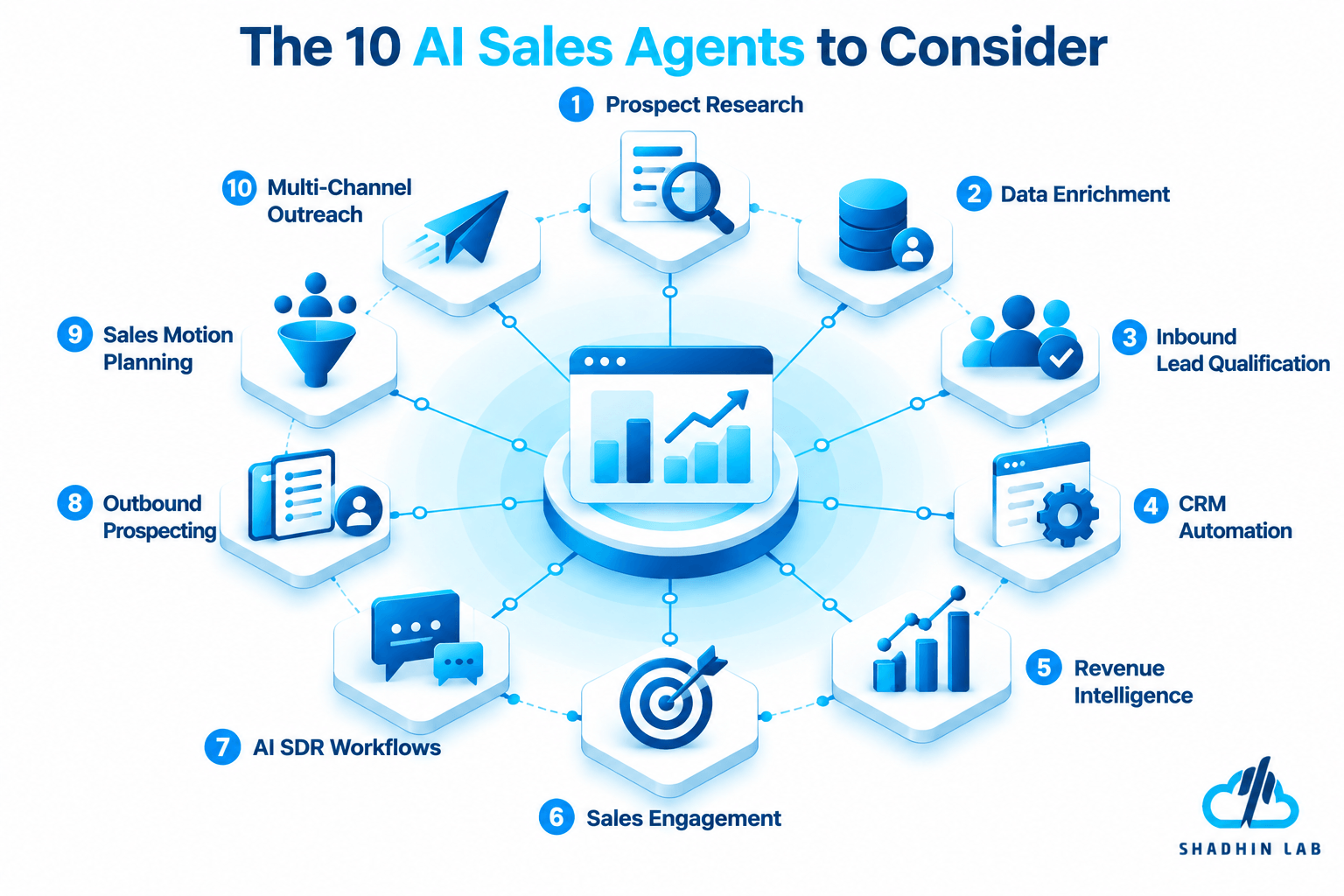
The 10 AI Sales Agents to Consider
The following tools cover different parts of the sales process. They are not ranked from 1 to 10 because their purposes are not identical.
| Tool | Primary focus | Inbound | Outbound | Research/Data | CRM/Workflow | Autonomy |
| 11x | Autonomous outbound | — | ✓ | ✓ | ✓ | High |
| Artisan | AI SDR / outbound | — | ✓ | ✓ | ✓ | High |
| AiSDR | Autonomous outbound | — | ✓ | ✓ | ✓ | High |
| Regie.ai | Sales engagement | ✓ | ✓ | ✓ | ✓ | Medium–High |
| Apollo | Data + prospecting | — | ✓ | ✓ | ✓ | Medium |
| Clay | Research + enrichment | — | ✓ | ✓ | ✓ | Workflow-dependent |
| Qualified | Inbound pipeline | ✓ | — | ✓ | ✓ | High |
| Salesforce Agentforce | CRM-native agents | ✓ | ✓ | ✓ | ✓ | Configurable |
| HubSpot Breeze | CRM + sales automation | ✓ | ✓ | ✓ | ✓ | Configurable |
| Gong | Revenue intelligence + agents | ✓ | ✓ | ✓ | ✓ | Assistive/workflow |
The table is best understood as a map of the market, not a leaderboard.
The 10 AI Sales Agents in Detail
1. 11x
11x is positioned around autonomous digital workers for sales, with Alice focused on outbound prospecting. Its current offering covers prospecting, enrichment, personalization, multi-channel sequences, lead nurture, signal-based triggers, meeting scheduling, and CRM synchronization.
The important difference is the degree of execution. 11x is designed to take ownership of defined outbound workflows rather than simply generate copy for an SDR.
Its current Growth plan starts at $3,750 per month when billed annually, covering up to 2,000 new prospects per month and up to five end users. Higher tiers are custom-priced. The company says Alice is priced around new prospects rather than individual email sends.
Best fit: teams looking for a highly autonomous outbound sales development workflow.
2. Artisan
Artisan’s Ava is positioned as an AI BDR designed to handle outbound prospecting and meeting generation. The platform combines prospect research, outreach, autonomous replies, meeting booking, contact data, and CRM synchronization.
That makes Artisan closer to an AI SDR platform than a general-purpose sales assistant. Its current plans are scoped around pipeline volume rather than publishing a simple flat monthly price. The Team plan is designed around roughly 2,500 leads contacted per month, while Scale is designed around roughly 6,000.
The platform also includes Salesforce and HubSpot synchronization and offers an AI dialer for human sales reps.
Best fit: teams that want an outbound AI BDR with managed deployment and human sales reps handling conversations that require a call.
3. AiSDR
AiSDR takes a more packaged AI SDR approach. Its workflow covers prospect research, outreach, follow-ups, and sales development activities across email and LinkedIn, with higher plans adding broader CRM and website-visitor capabilities.
Pricing is relatively transparent compared with many enterprise sales platforms. The current Solo plan starts at $250 per month, while higher plans include Explore at $900 per month and Scale at $2,500 per month.
The practical question is not simply how much outreach it can generate. Buyers should look at the number of researched contacts, sending infrastructure, CRM integration, and how much of the workflow can run without manual intervention.
Best fit: founders and sales teams looking for a packaged AI SDR rather than building their own outbound automation stack.
4. Regie.ai
Regie.ai sits between AI sales engagement and autonomous sales workflow automation. Its platform combines prospect research, enrichment, messaging, sequences, a dialer, and AI agents.
That broader positioning makes it useful when the goal is not necessarily to hand the entire SDR function to an autonomous agent, but to automate substantial parts of prospecting and engagement while retaining sales-team control.
Regie’s current public pricing includes a free tier, a $49/month Pro plan, and custom Enterprise pricing. Enterprise adds capabilities such as shared agents, custom CRM synchronization, advanced analytics, and enterprise security.
Best fit: sales teams that want AI-powered prospecting and engagement while maintaining more control over the sales workflow.
5. Apollo
Apollo is different from a pure autonomous AI SDR. Its strength comes from combining B2B data, prospect discovery, enrichment, sequencing, and AI-assisted workflows in one sales platform.
Its Outbound Copilot can automatically identify prospects matching an ICP and add them to lists or sequences. Teams can also use Apollo AI for research and personalization.
That makes Apollo particularly relevant for organizations that want to build an AI-assisted outbound engine around a large prospect database rather than simply deploy a fully autonomous digital SDR.
Best fit: teams that need prospect data, enrichment, sequencing, and AI automation in the same sales platform.
6. Clay
Clay belongs in this comparison because modern AI sales workflows increasingly depend on data quality and research.
Clay is particularly useful for enrichment, account research, signals, data waterfalls, and AI-powered research. Its Claygent agent can conduct web research and generate custom data points.
But Clay should not be confused with a traditional autonomous SDR. Its value is often in creating the intelligence and workflow layer that other sales systems can use.
Pricing is usage-oriented. The current Free plan includes 500 actions per month, while Launch starts at $167 per month. Data credits and AI usage can add variable costs depending on the workflow.
Best fit: teams building sophisticated prospect research, enrichment, and GTM automation workflows.
7. Qualified
Qualified focuses heavily on inbound pipeline generation. Its Piper AI SDR engages website visitors, qualifies prospects, routes conversations, and helps book meetings.
This is a fundamentally different sales motion from an outbound AI SDR. Instead of searching for prospects and initiating cold outreach, the agent works with people who have already arrived through a website or other inbound channel.
Qualified’s platform includes Salesforce integration, enrichment, routing, reporting, and AI SDR functionality. Its public pricing page does not provide a simple universal monthly price and instead directs buyers toward a sales process.
Best fit: B2B companies where website traffic and inbound demand are important sources of pipeline.
8. Salesforce Agentforce
Salesforce Agentforce is broader than an AI SDR. It is a CRM-native agent platform that can support prospecting, lead engagement, account research, pipeline workflows, and other sales processes inside the Salesforce ecosystem.
Its Prospecting Agent, for example, can research accounts and people, identify signals, enrich buyer information, and generate relevant messaging.
The major advantage of a CRM-native approach is context. The agent can operate with CRM records and connected business data rather than functioning as an isolated sales application.
Pricing is also more complex than a standard SaaS subscription. Salesforce currently offers consumption-based Flex Credits, conversation-based pricing, and per-user licensing, depending on the deployment.
Best fit: organizations already invested in Salesforce that want AI agents deeply connected to their CRM and enterprise workflows.
9. HubSpot Breeze
HubSpot’s Breeze ecosystem takes a similar CRM-native approach. Its Prospecting Agent can monitor buying signals, research accounts, identify contacts, and draft personalized outreach.
HubSpot also provides an Agent Builder for creating custom agents around CRM data, business processes, knowledge, and defined actions.
One notable feature is the ability to keep a human review step before outreach or move toward more autonomous execution once a team is comfortable with the workflow.
Current pricing is increasingly usage-based. HubSpot lists $1 per lead recommended for outreach for Prospecting Agent, with usage running through HubSpot Credits.
Best fit: HubSpot customers that want sales agents working directly with CRM history, contacts, deals, and existing workflows.
10. Gong
Gong is another example of why the term “AI sales agent” needs careful definition.
Gong’s core strength has historically been revenue and conversation intelligence. Its newer AI agent capabilities extend that intelligence into execution, with agents designed for tasks such as research, CRM data extraction, briefing, coaching, and revenue workflows.
Rather than replacing an outbound SDR workflow, Gong is more focused on turning revenue data and customer conversations into actions across the sales organization.
Its pricing is custom and combines per-user licensing with a platform fee.
Best fit: revenue organizations that want AI agents connected to conversation intelligence, deal data, CRM information, and revenue operations.
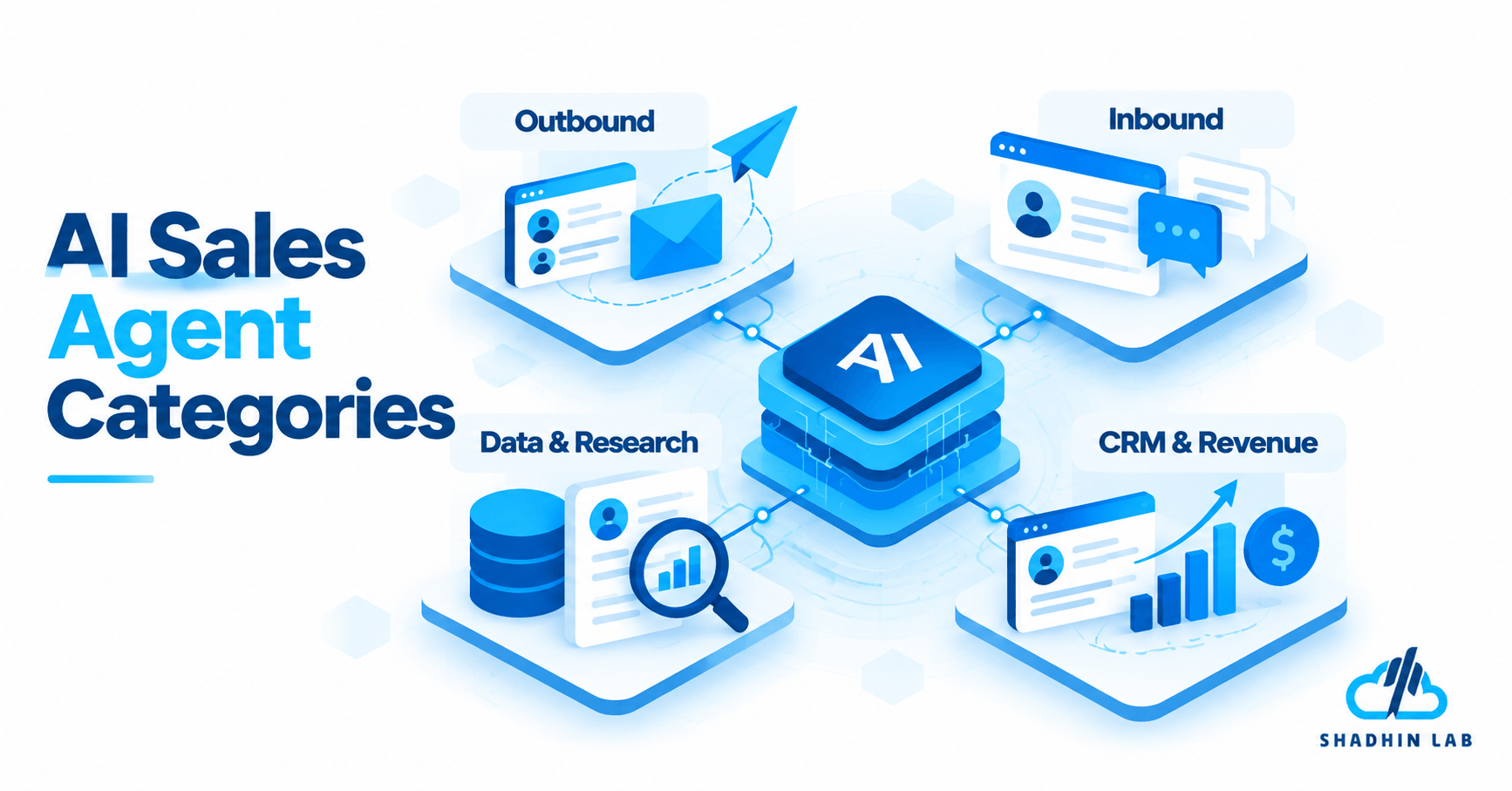
Types of AI Sales Agents
Before comparing individual products, it helps to understand the main categories.
Inbound AI Sales Agents
Inbound agents focus on prospects who already interact with your business.
They can engage website visitors, answer product questions, collect qualification information, route leads, and help prospects book meetings.
This model makes sense when your company already generates meaningful inbound traffic but sales representatives cannot respond to every potential buyer quickly.
Autonomous Outbound AI SDRs
Outbound AI SDRs work proactively.
They can identify prospects, research accounts, personalize messages, execute outreach sequences, handle some replies, and schedule meetings.
The main benefit is not simply writing emails faster. It is automating a larger portion of the prospecting workflow.
Prospecting and Enrichment Agents
These systems focus on finding and understanding potential buyers.
They can identify accounts, enrich contact records, research companies, detect signals, score prospects, and prepare information for sales outreach.
They may not replace an SDR, but they can automate some of the most time-consuming research work.
CRM-Native Sales Agents
CRM-native agents operate inside platforms such as Salesforce or HubSpot.
Their advantage is access to existing customer, lead, account, and opportunity data. Rather than requiring a separate sales system, the agent can work within the environment the sales team already uses.
Sales Copilots
Sales copilots assist human sellers rather than independently owning the entire workflow.
They may help with research, email creation, call preparation, summarization, recommendations, or next steps.
For teams that want AI assistance but still want humans approving most actions, a copilot can be a better fit than a highly autonomous agent.
How AI Sales Agents Automate the Sales Process
A mature AI sales workflow looks less like “write me an email” and more like an operating system for a specific sales process.
A typical outbound workflow can begin with the ICP, identify matching accounts, enrich contacts, research recent company activity, determine whether the prospect meets qualification rules, personalize outreach, send the message, interpret the response, and route qualified conversations to a salesperson.
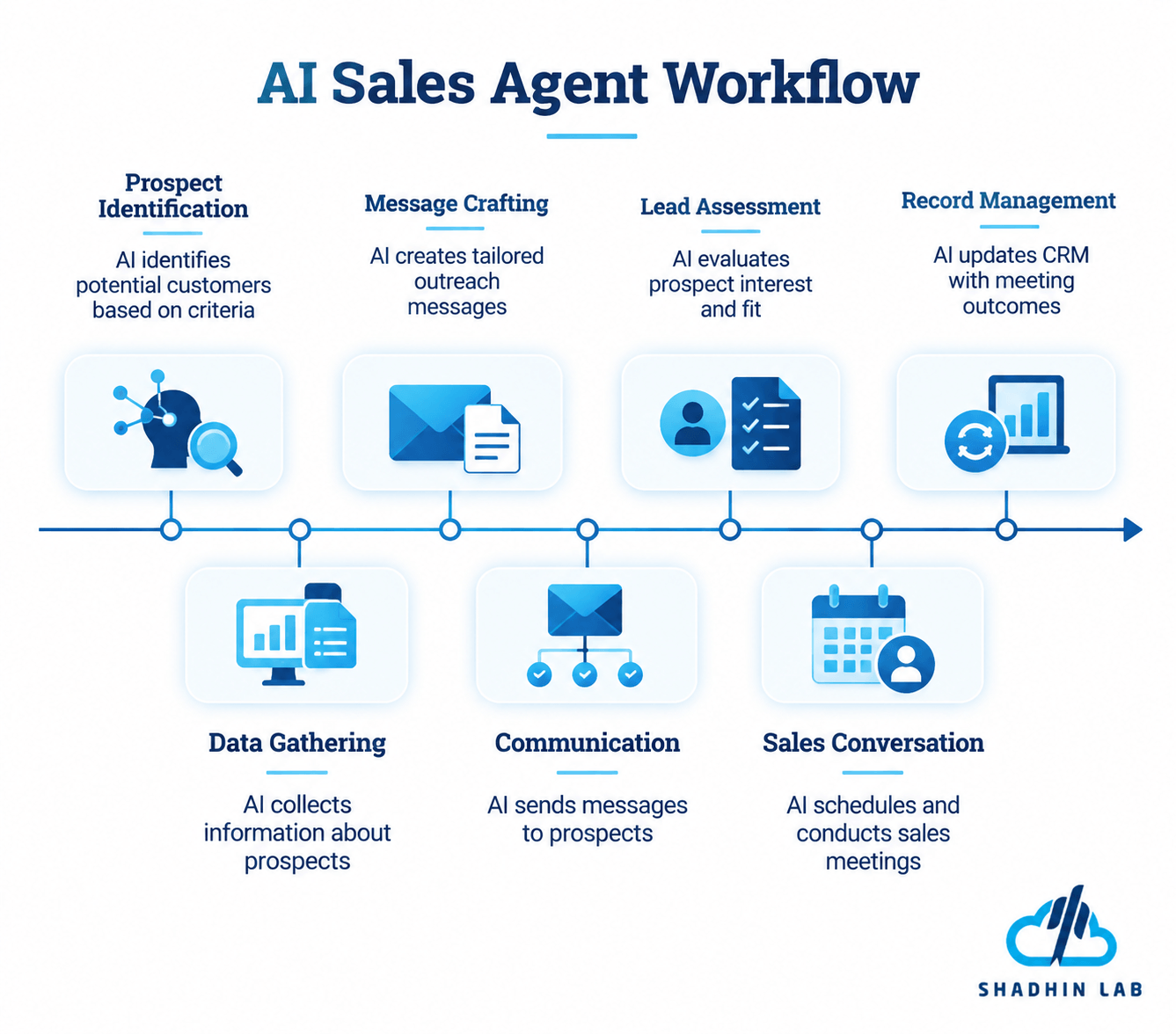
The CRM then becomes the system of record. The agent should write back relevant activity, update lead status, and notify the appropriate person when human intervention is required.
The best implementations do not give the agent unlimited freedom. They define what the agent can access, what actions it can perform, and which decisions require approval.
Outbound vs Inbound AI Sales Agents
| Factor | Outbound agent | Inbound agent |
| Starting point | Target account or prospect | Website visitor or inbound lead |
| Main goal | Create conversations | Capture existing intent |
| Research | High | Medium–high |
| Qualification | Yes | Yes |
| Outreach | Core capability | Usually secondary |
| Response speed | Scheduled or signal-based | Real-time |
| Typical examples | 11x, Artisan, AiSDR | Qualified, HubSpot |
Outbound agents create demand. Inbound agents respond to demand that already exists. The underlying AI may be similar, but the workflows, data, timing, and success metrics are different.
AI Sales Agent vs AI SDR vs AI Sales Assistant
These terms overlap, but they usually describe different levels of responsibility.
An AI sales agent is the broader concept: software capable of executing multi-step sales work.
An AI SDR usually focuses specifically on prospecting, outreach, follow-up, qualification, and meeting generation.
An AI sales assistant generally works alongside a salesperson, helping with research, summaries, drafting, recommendations, or administrative tasks.
AI sales automation is the broadest term and can include both traditional rule-based automation and newer agentic workflows.
Because vendors use these labels inconsistently, evaluate the actual actions a product can perform rather than the terminology on its homepage.
What to Look for When Choosing an AI Sales Agent
Start with workflow coverage. If the problem is outbound prospecting, a tool that only summarizes calls is not solving the core problem.
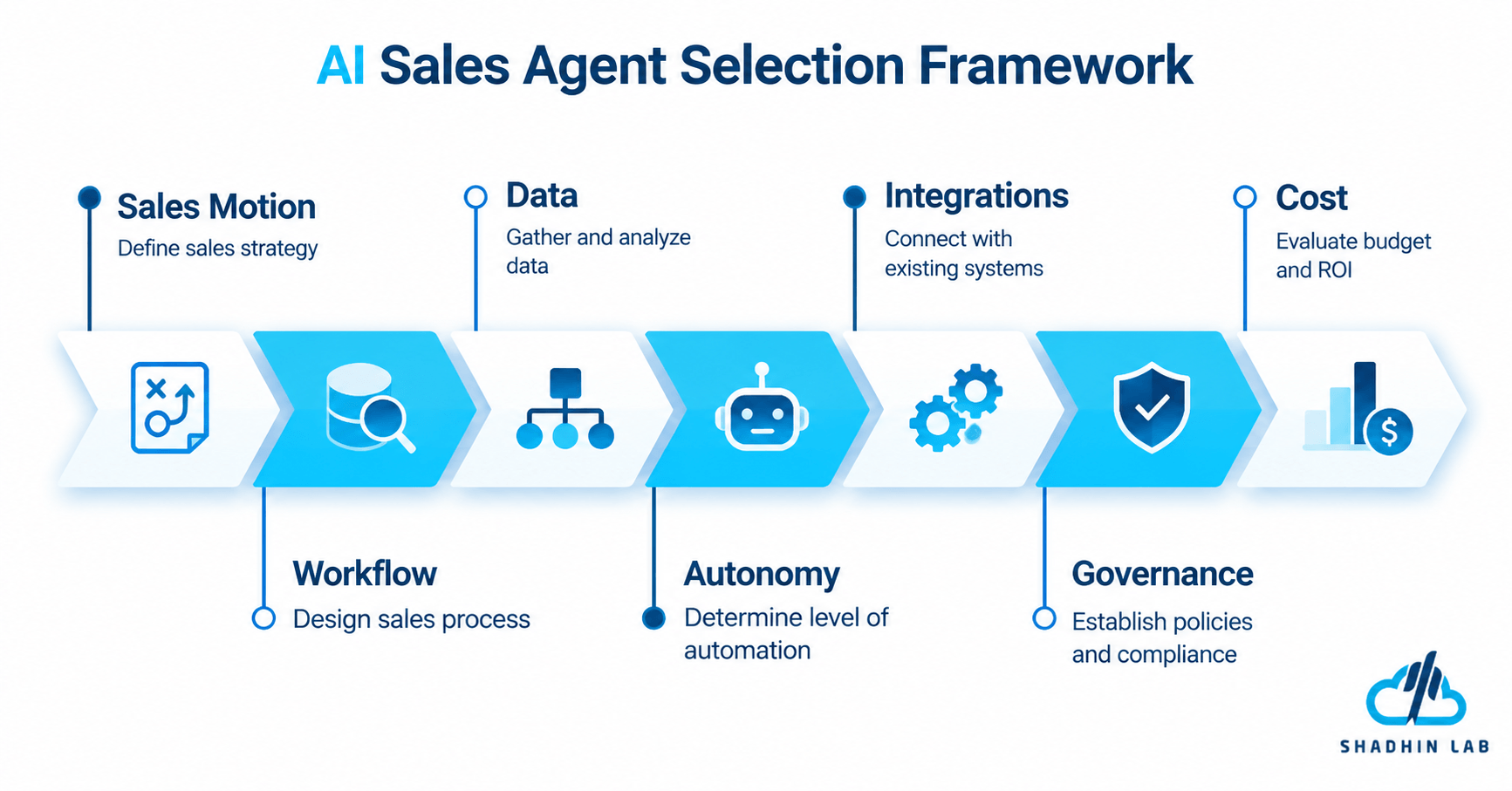
Then examine autonomy. Can the system research and draft while requiring approval, or can it independently send messages and respond to prospects? Neither model is automatically right; the appropriate level depends on the risk and repeatability of the workflow.
Data quality is equally important. An intelligent agent operating on inaccurate company records can simply automate bad decisions faster.
CRM integration should also be tested rather than assumed. Check whether the agent can read the fields it needs, write the outcomes back correctly, and trigger downstream workflows.
Finally, consider channels, deliverability, permissions, analytics, auditability, and human oversight. The closer an agent gets to independently contacting prospects or modifying business records, the more important these controls become.
AI Sales Agent Pricing
AI sales agent pricing is difficult to compare because vendors charge for different units of work.
Some charge by users or seats. Others charge by prospects, contacts, credits, conversations, or completed actions. Enterprise platforms may combine subscription fees with usage-based charges.
The software subscription is therefore only part of the cost.
A realistic calculation should include data enrichment, sending infrastructure, AI usage, CRM requirements, implementation, monitoring, human review, and the operational cost of managing the workflow.
For example, 11x currently publishes a prospect-based model, AiSDR publishes monthly plans, Clay combines actions and data credits, HubSpot charges for certain agent outcomes, and Salesforce offers consumption-based Agentforce pricing. These models are difficult to compare using a single “monthly price.”
Always verify pricing immediately before purchasing because AI usage models are changing quickly.
When You Shouldn’t Use an AI Sales Agent
AI sales automation is not automatically useful just because a workflow can be automated.
If your ICP is unclear, CRM data is unreliable, sales processes change constantly, or every prospect requires significant human judgment, automation may create more operational problems than it solves.
The same applies when sales volume is too low to justify the implementation or when the brand risk of poorly controlled outreach is unacceptable.
The basic principle is simple: process clarity should come before automation.
Off-the-Shelf vs Custom AI Sales Agents
| Factor | Off-the-shelf | Custom |
| Setup | Faster | More involved |
| Customization | Platform-dependent | High |
| CRM integration | Prebuilt options | Custom |
| Business rules | Limited by platform | Fully configurable |
| Proprietary data | Depends on integrations | Deep integration possible |
| Governance | Vendor controls + configuration | Designed around requirements |
| Cost model | Subscription/usage | Development + operating cost |
| Best fit | Standard workflows | Complex workflows |
Off-the-shelf software is usually the practical starting point when the workflow closely matches an existing product.
Custom development becomes more attractive when the agent must connect CRM, ERP, internal databases, communication platforms, proprietary knowledge, or industry-specific qualification rules.
How to Implement an AI Sales Agent
Start with one workflow, not the entire sales organization.
Define the outcome first. “Use AI” is not a measurable objective; “reduce lead research time” or “automate qualification for inbound demo requests” is.
Next, document the existing process. Identify the trigger, data sources, decisions, actions, exceptions, and points where a salesperson must take over.
Once the workflow is mapped, choose the agent category that matches it. Connect the required CRM and data sources, define permissions, establish approval rules, and run a controlled pilot.
Only after the workflow produces reliable results should you expand it to additional segments or sales processes.
This staged approach also makes measurement easier because you can compare the automated workflow against the previous process.
Risks, Limitations, and Security
Giving an AI agent access to sales systems creates a different risk profile from using AI purely for writing.
An agent may encounter inaccurate prospect information, generate incorrect personalization, misclassify a lead, update the wrong CRM record, or expose information it should not access. Prompt injection and malicious content can also become relevant when agents consume external webpages, emails, documents, or other untrusted inputs.
OWASP’s 2026 Top 10 for Agentic Applications specifically addresses security risks associated with autonomous and agentic systems.
The practical response is not to eliminate autonomy. It is to constrain it. Give agents only the permissions they need, separate low-risk actions from high-impact actions, log important decisions, and require human approval where an error could create significant commercial, legal, or reputational consequences.
Gartner similarly emphasizes clear role definition, guardrails, and onboarding when deploying AI SDR agents.
How to Measure AI Sales Agent Performance
The first mistake is measuring activity instead of business impact.
An agent might research thousands of prospects or send thousands of emails while producing little qualified pipeline. Activity matters, but it is not the final outcome.
A useful measurement framework moves from efficiency to quality and then to commercial results:
| Measurement area | Examples |
| Productivity | Hours saved, research time, response time |
| Sales activity | Prospects researched, conversations, follow-ups, meetings |
| Quality | Qualified-lead rate, meeting quality, CRM accuracy |
| Business outcome | Pipeline, conversion, sales cycle, revenue influenced |
Gartner has also cautioned that simply deploying more AI agents does not guarantee better productivity; data foundations, workflow integration, and seller experience matter to whether agents create value.
Frequently Asked Questions
Are AI sales agents fully autonomous?
Some are designed for high autonomy, while others operate with human approval. The level of autonomy depends on the product, configuration, workflow, and permissions granted to the agent.
Can AI sales agents generate leads?
Yes. Depending on the platform, an agent may identify prospects based on ICP criteria, buying signals, account research, or inbound activity.
Can AI sales agents send cold emails?
Some outbound platforms can automate email outreach. Buyers should evaluate sending infrastructure, deliverability controls, personalization quality, approval settings, and compliance requirements before enabling autonomous sending.
Can AI sales agents qualify leads?
Yes. Agents can evaluate lead information against predefined qualification criteria and route or escalate leads based on the result.
Can AI sales agents update a CRM?
Yes. CRM write-back is increasingly important in agentic sales workflows. Salesforce Agentforce, HubSpot Breeze, 11x, Gong, and other platforms provide different levels of CRM integration.
Are AI sales agents suitable for small businesses?
They can be, particularly when the sales workflow is repetitive and there is enough volume to justify automation. Smaller teams should pay close attention to pricing, setup requirements, data quality, and whether the workflow is actually worth automating.
Conclusion
Choosing an AI sales agent should start with the sales motion, not the product name.
Define the workflow you want to automate, identify the data the agent needs, decide how much autonomy is appropriate, check the integrations, establish governance, and determine how success will be measured.
For outbound sales, autonomous AI SDR platforms can handle much of the prospecting and engagement workflow. For inbound sales, conversational agents can qualify and route existing demand. Data platforms such as Clay and Apollo can provide the research layer, while Salesforce, HubSpot, and Gong approach agentic sales through broader CRM and revenue workflows.
And when the sales process does not fit neatly into one platform, custom development can provide another path.
If your sales process requires more than an off-the-shelf platform can provide, ShadhinLab can help design and implement custom AI agents that connect your CRM, sales data, communication tools, and business workflows.

Shaif Azad
Shaif Azad Rahi is an AI/ML professional and Solution Engineer at Shadhin Lab, specializing in AI-powered solutions and scalable software systems, with a focus on applying AI to solve real-world business challenges.
Related Post
AI for Lead Generation: Strategies, Tools, and Workflows
Generating leads is not just about finding more potential customers. Businesses need to identify the right...
AI Email Assistant Guide: Write, Reply, and Save Time
Email can quietly consume hours of your workweek. Reading long threads, drafting replies, rewriting awkward messages,...
AI Risk Management: Frameworks, Challenges & Best Practices
Are you someone who lies awake wondering if your AI systems might suddenly make catastrophic decisions?...
